
Residential Metal Roofing Installation in Columbia
About half of Columbia's housing was built in 1979 or earlier, so most metal roofing jobs here start with an old roof coming off. Fewer than half of the city's homes are owner-occupied, so if you rent, the roof is your landlord's call. We book installers. We don't sell panels, trim or screws over the counter.
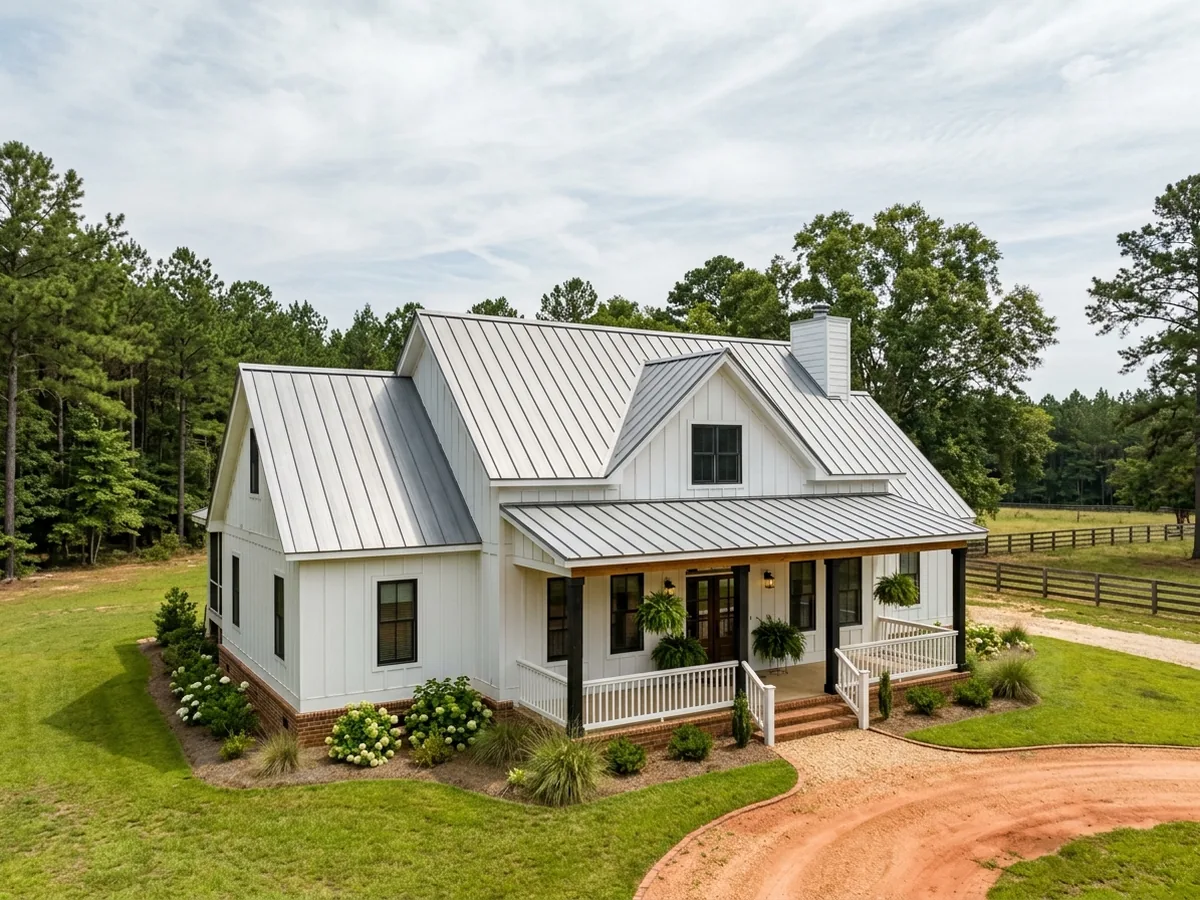
Standing Seam Metal Roof Installation
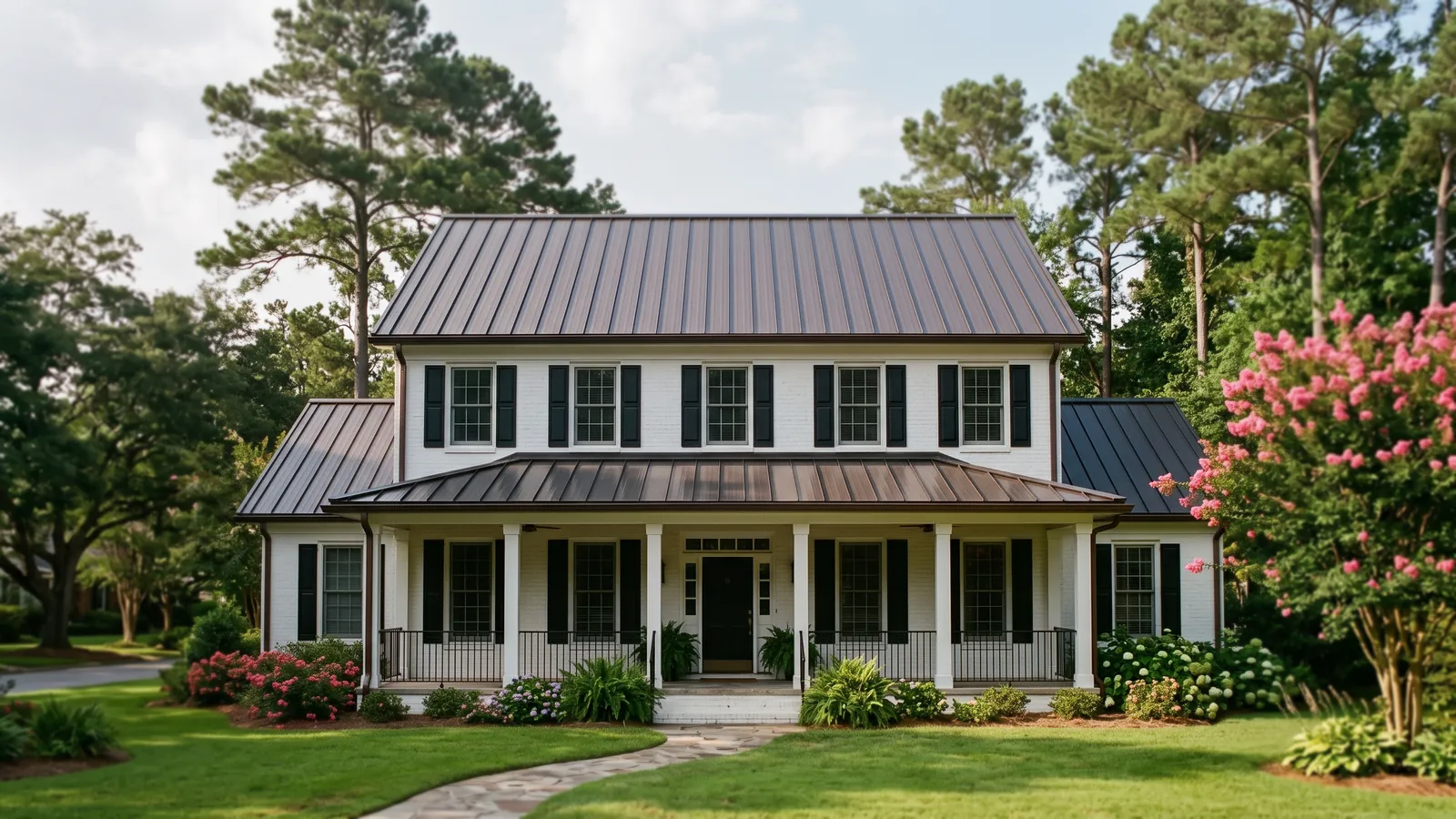
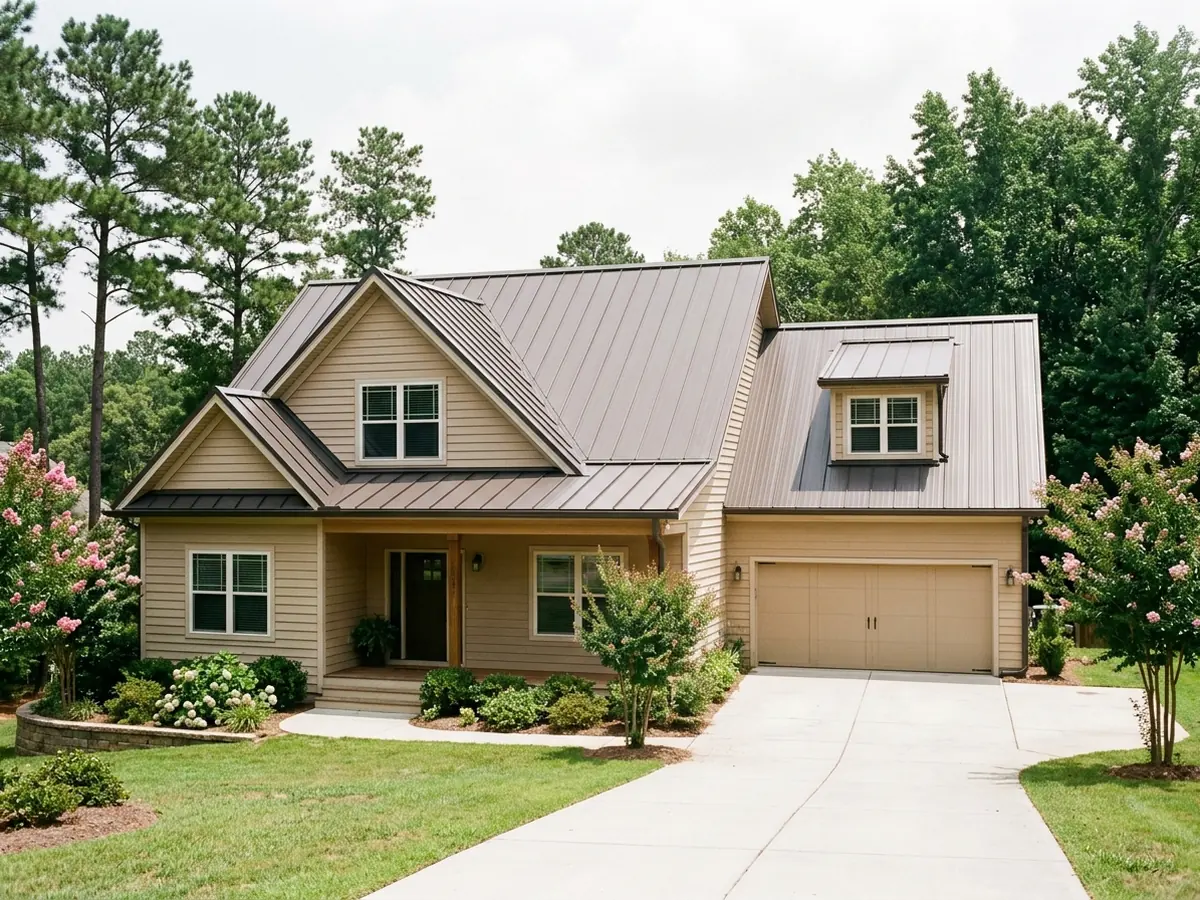
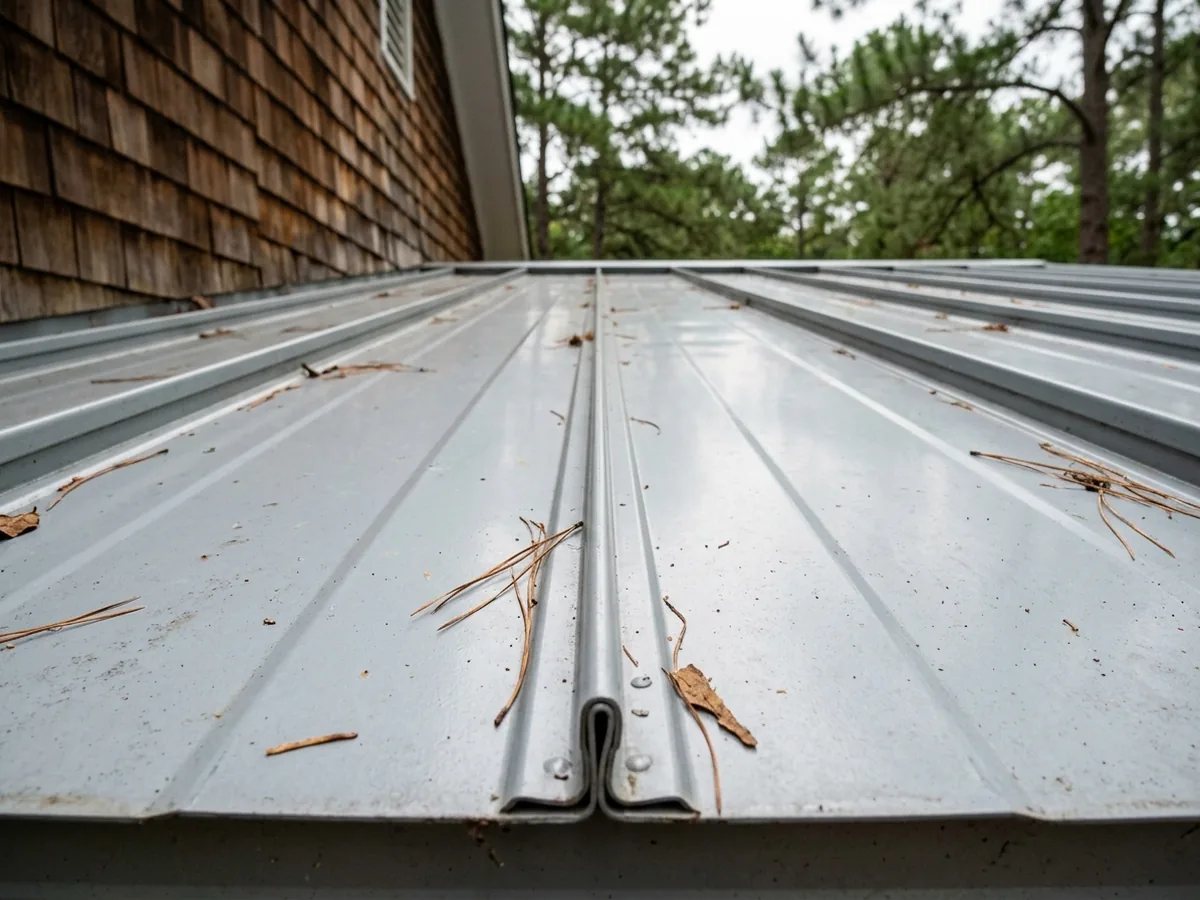
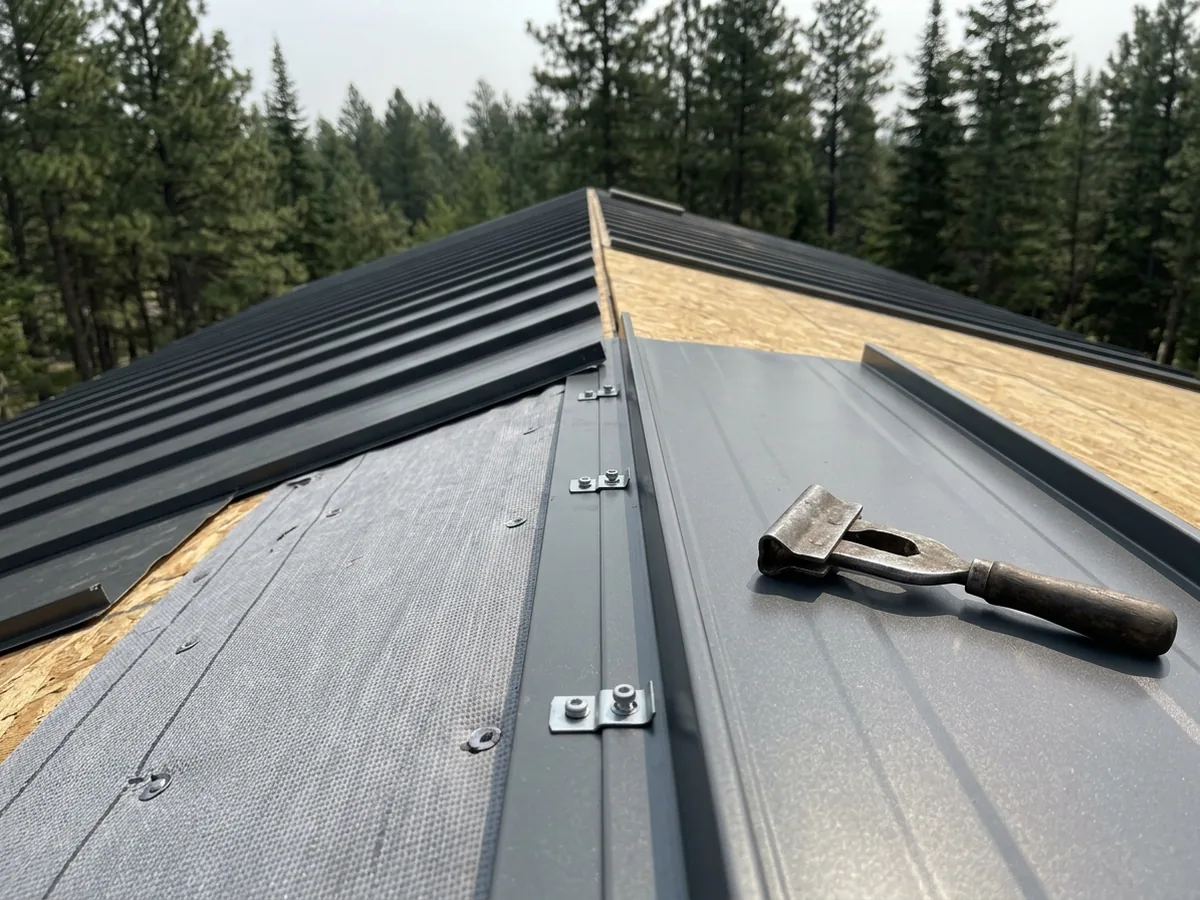
Standing seam panels run in one length from eave to ridge, and the joints rise as raised ribs instead of lapping flat. Clips screwed to the deck hold each panel and hide under the seam, so nothing pierces the weather surface. The clips also let the steel slide. Late afternoon in July, with the normal high at Columbia Metropolitan Airport at 92.7°F, a dark panel is too hot to rest a hand on. Then it cools and shrinks again overnight. Screws through the face loosen under that daily cycle. Clips don't.
There are two seam types. Snap-lock panels click together and suit most steep house roofs. Mechanically seamed panels are crimped closed with a seaming tool, which locks harder and is the one to ask about on shallow pitches. The South Carolina code lets standing seam go down to a 1/4:12 slope, lower than any other metal system. Ask for the gauge in writing. Heavier steel (a lower gauge number) shows less oil canning, the faint waviness you sometimes see on wide flat pans. Standing seam also takes solar without drilling. Non-penetrating clamps grip the seam with round-tipped setscrews.
See Standing Seam Metal Roof in Columbia and Low Slope Metal Roof in Columbia.
Shingle-to-Metal Roof Conversions
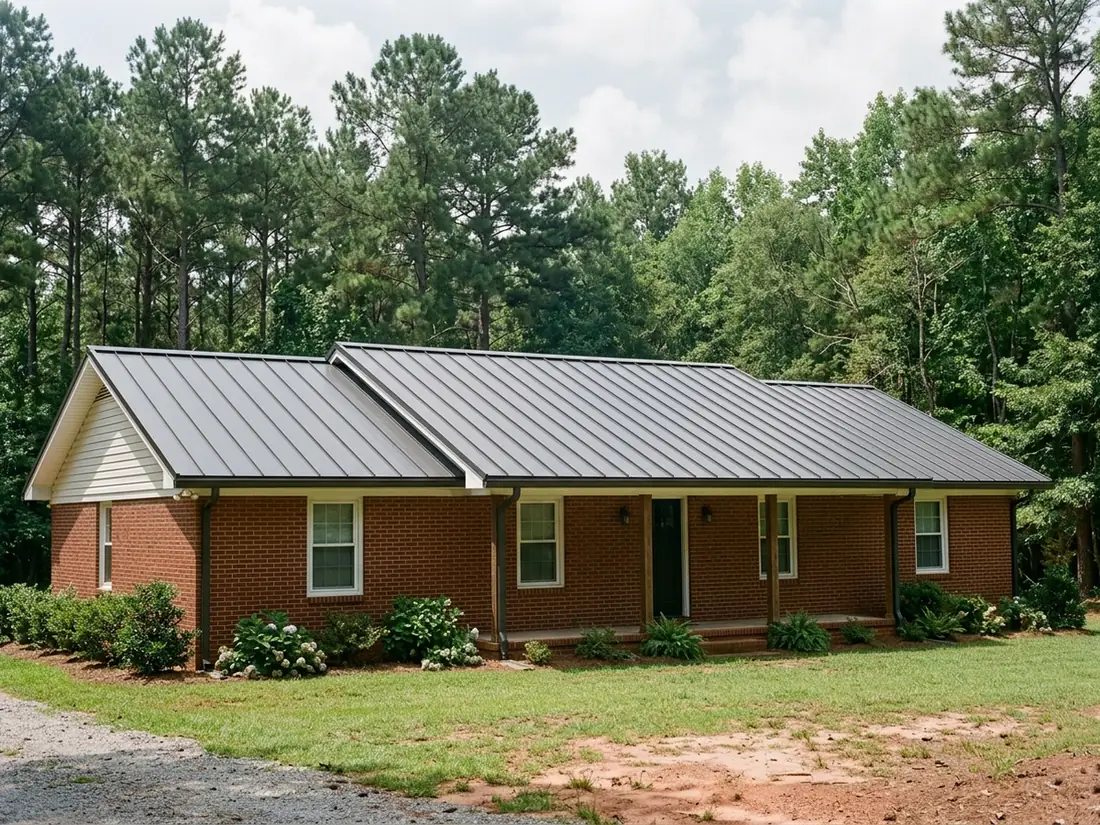
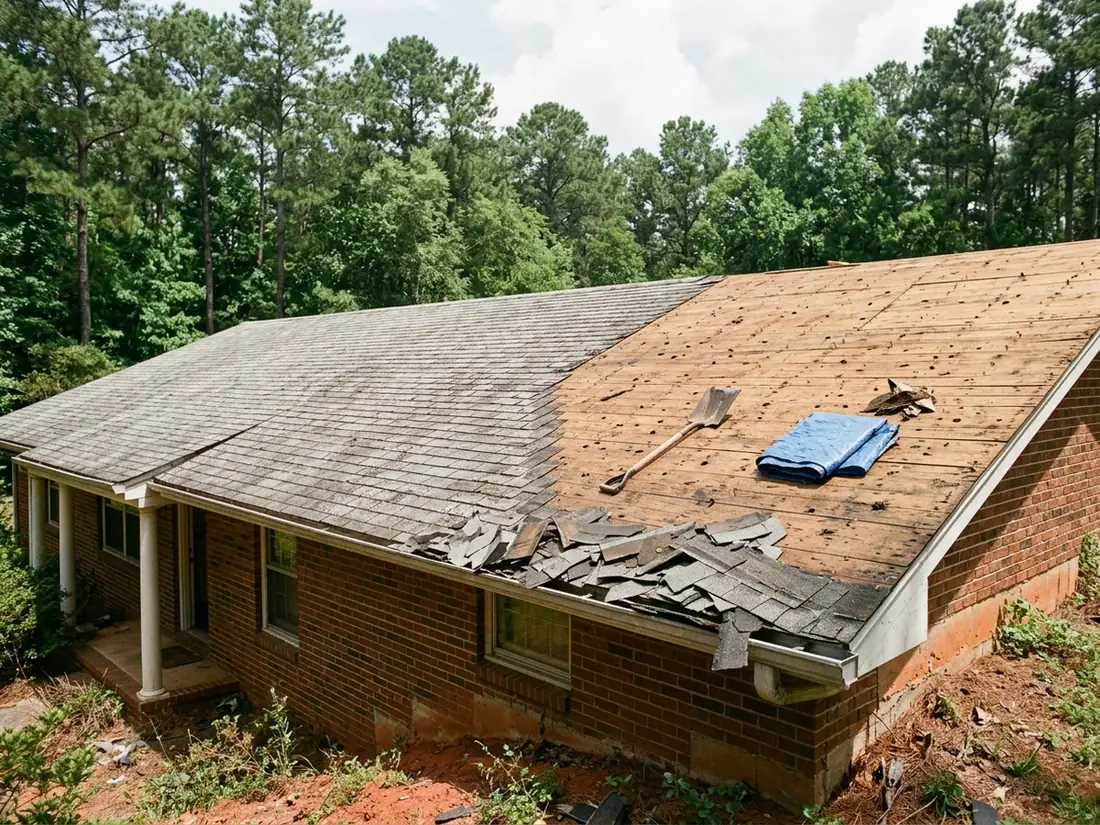
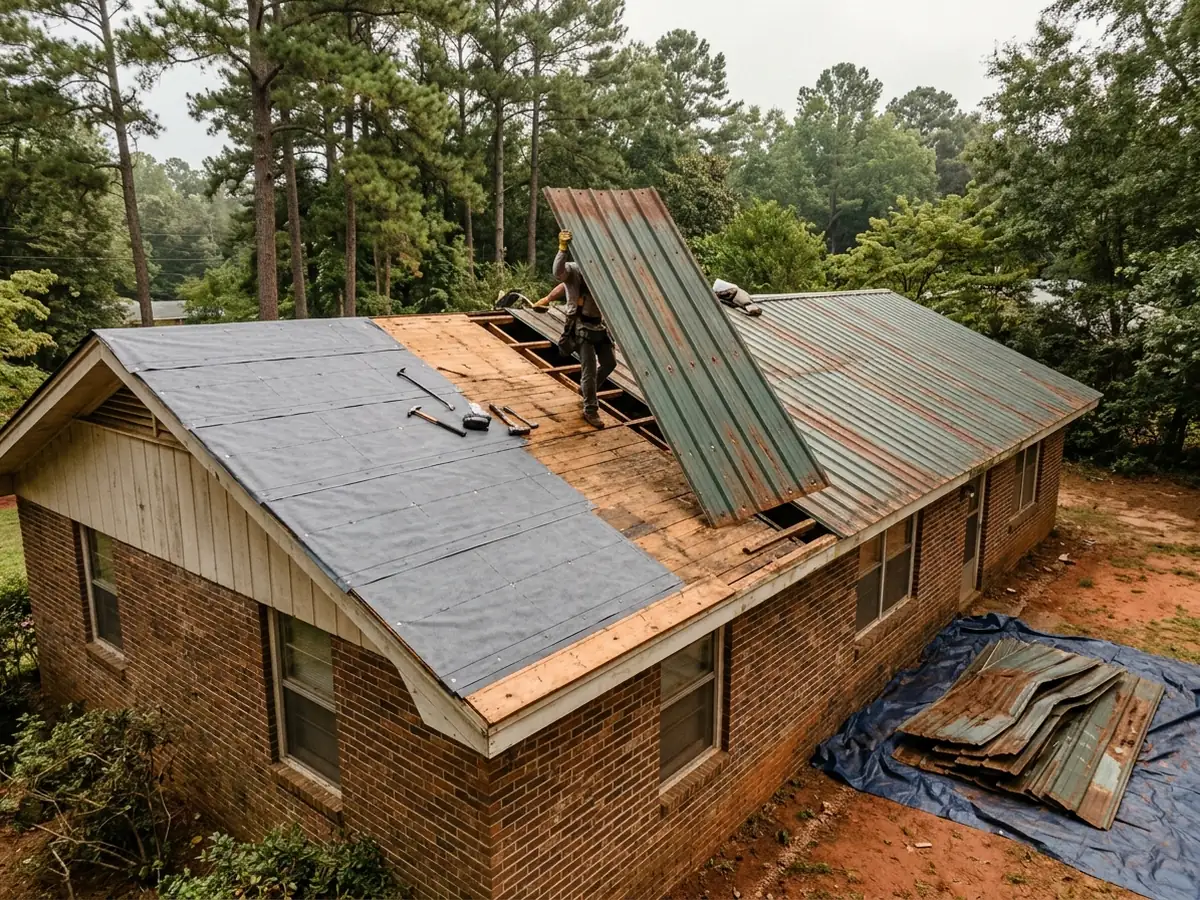
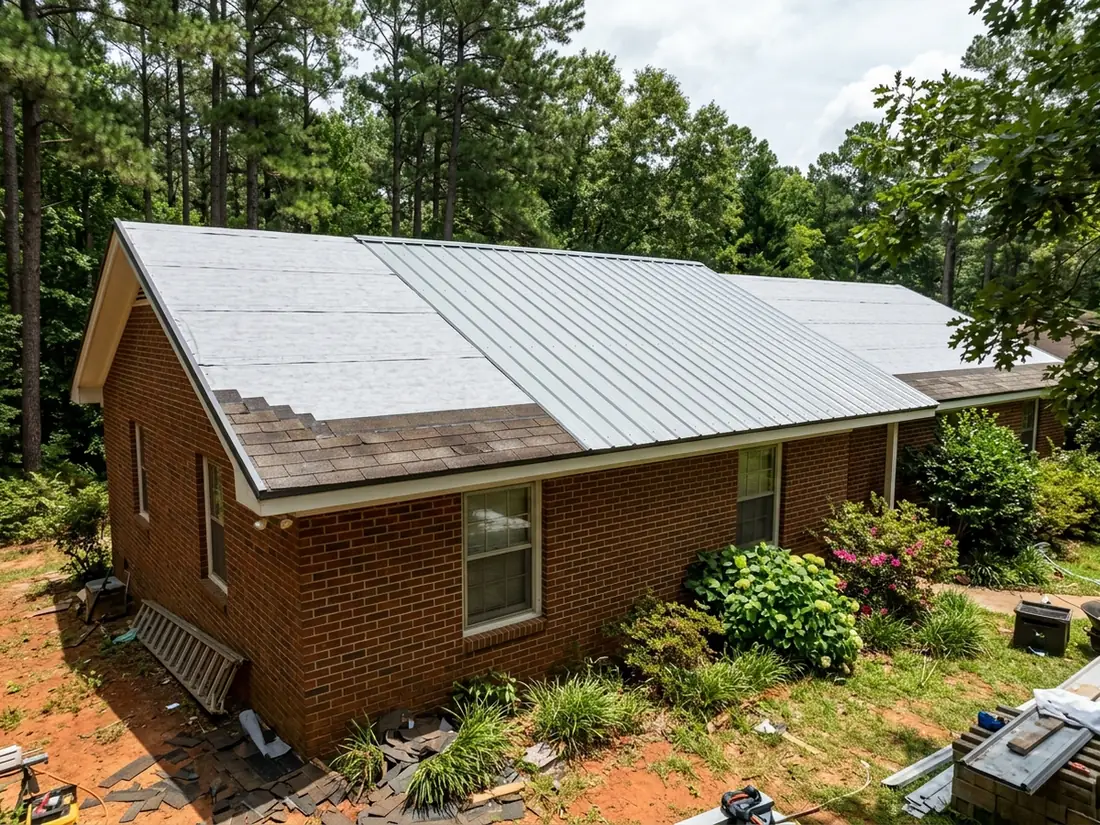
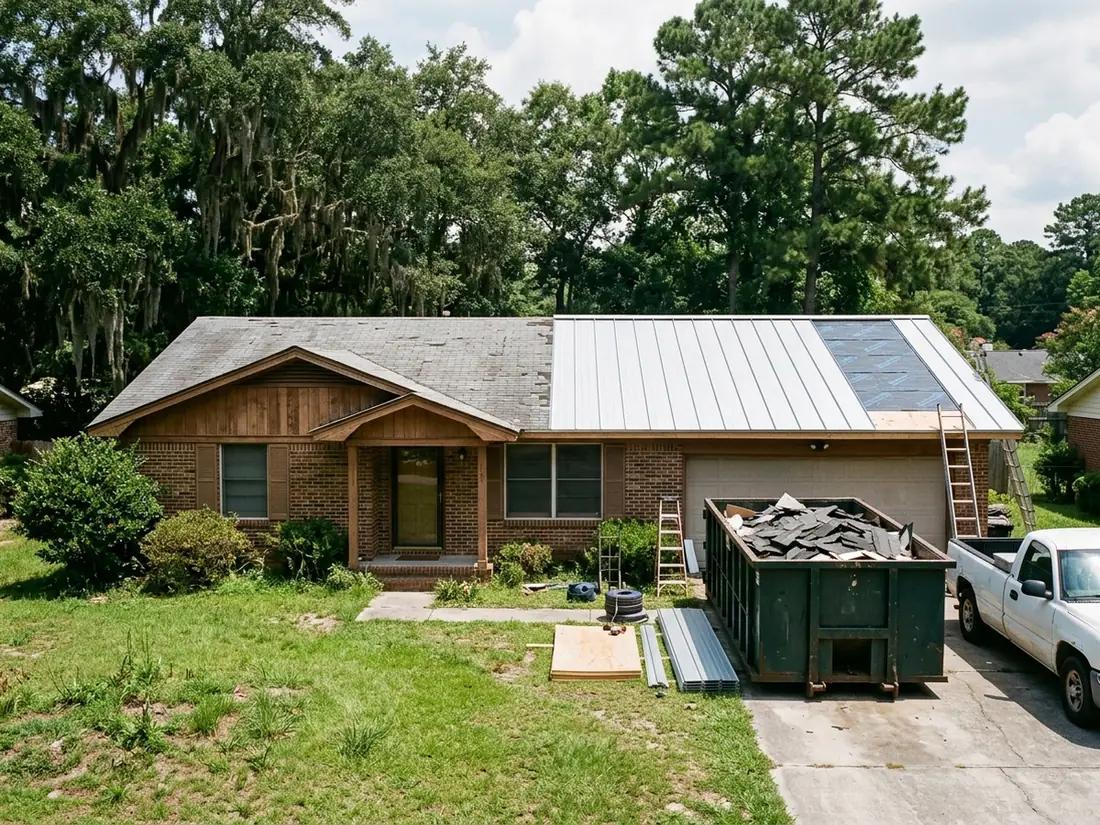
A lot of metal roofing work in Columbia is a conversion: an asphalt roof at the end of its life, and an owner who doesn't want to do this again in fifteen years. The Metal Roofing Alliance puts asphalt at 12 to 20 years and metal at 30 to 50+. A replacement under the 2021 South Carolina Residential Code means stripping to the deck (R908.3), and that's when the real condition of the house shows. With the shingles gone, a good roofer will walk the sheathing and replace soft or delaminated sheets. Then comes synthetic underlayment, new drip edge at eaves and rakes, and a ridge vent sized to the attic. The code minimum for attic ventilation is 1/150 of the vented area (R806.2). On a 1970s ranch with one gable vent and nothing at the soffits, fixing the airflow matters as much as the panels.
Metal Shingle and Metal Tile Roofing
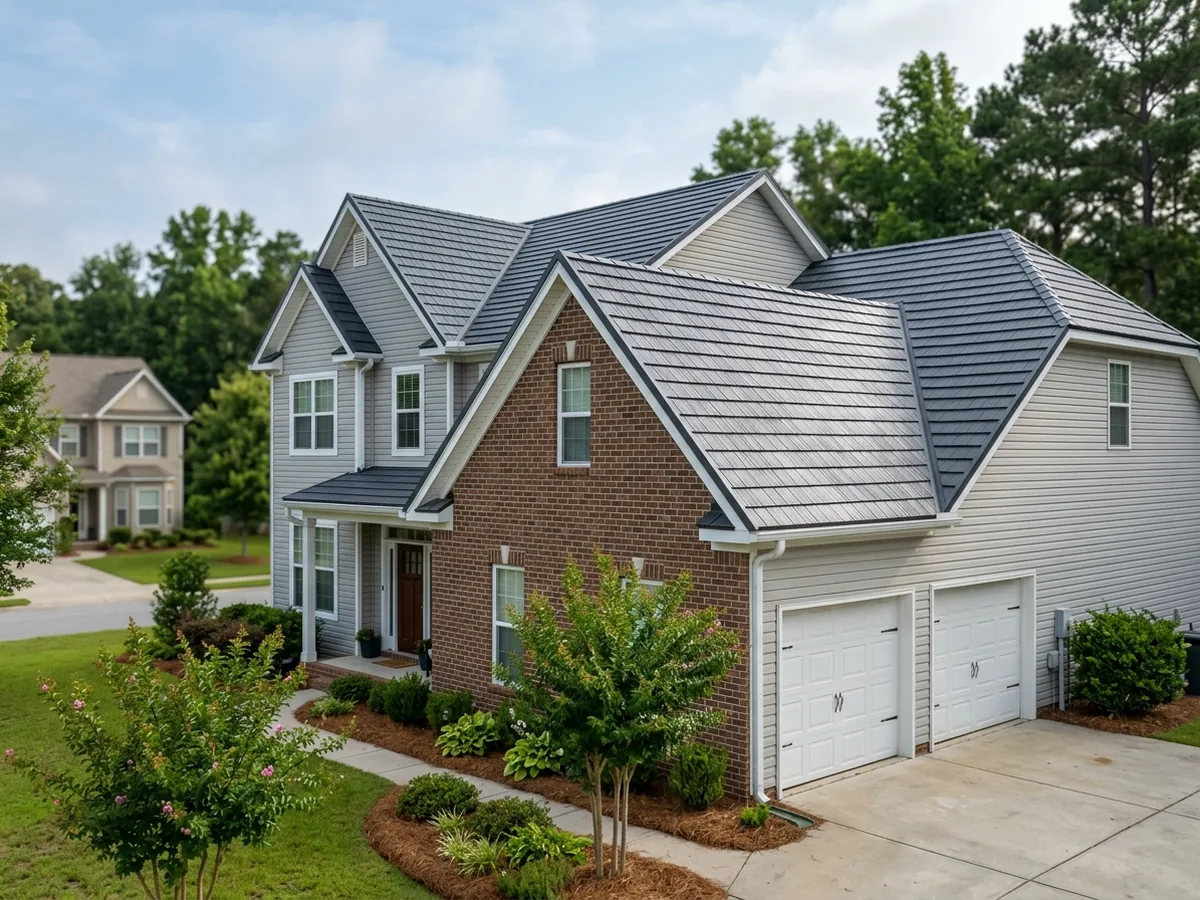
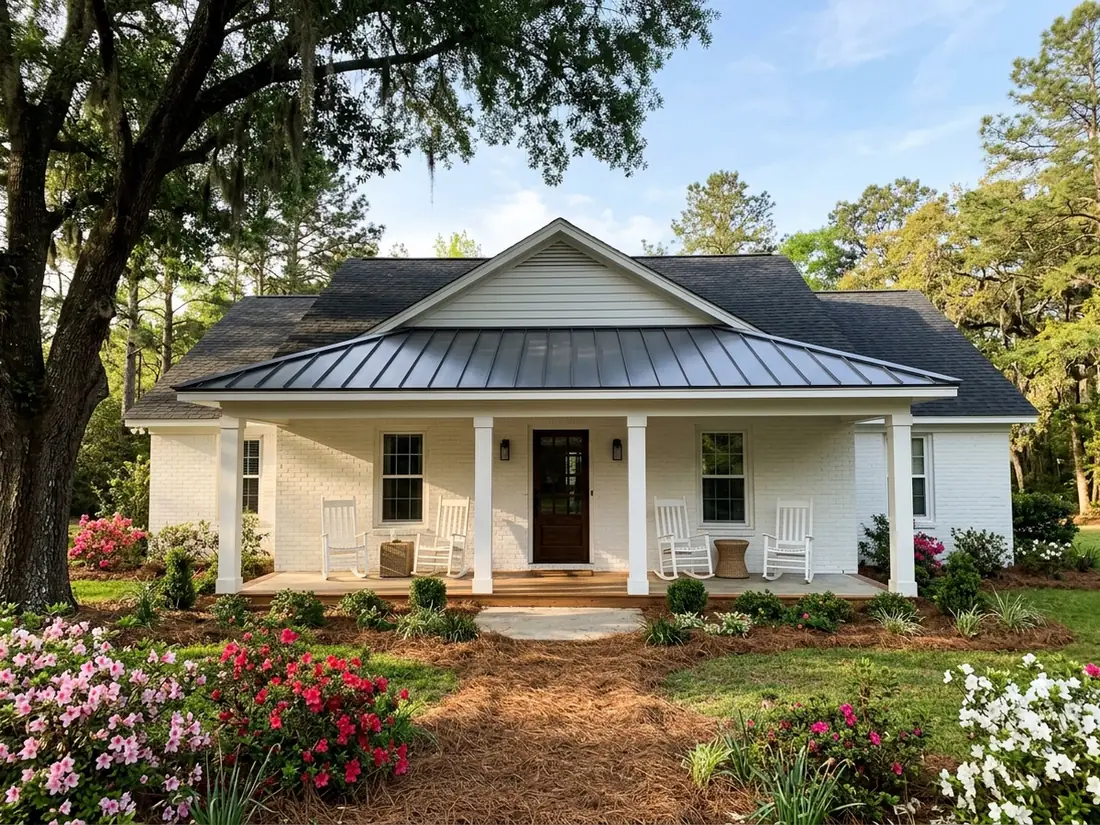
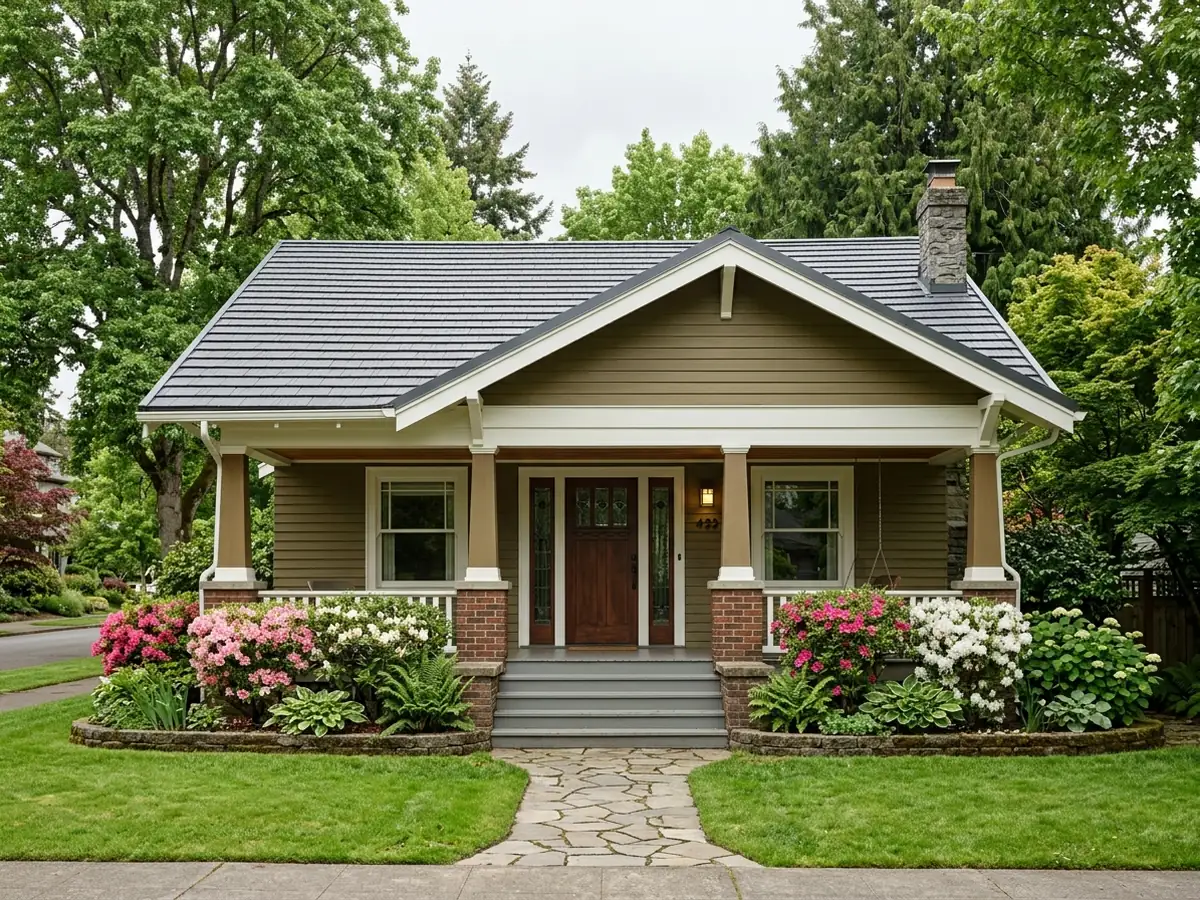
Metal shingles are stamped steel or aluminum pieces that interlock on all four sides and copy slate, shake, tile or architectural asphalt. Choose them when the street view matters: an HOA, a bungalow front, or a historic district. Columbia's Earlewood Protection Area guidelines list pressed metal shingles and standing seam with a historic profile as permitted roofing for new construction. The code wants a 3:12 slope or steeper for metal shingles (R905.4.2) on a solid or closely fitted deck (R905.4.1). South Carolina points their wind design to R905.4.4, which names ASTM D3161, FM 4474, UL 580 and UL 1897 as the uplift tests. Ask which one your product passed.
Stone-Coated Steel Shake and Tile Roofs
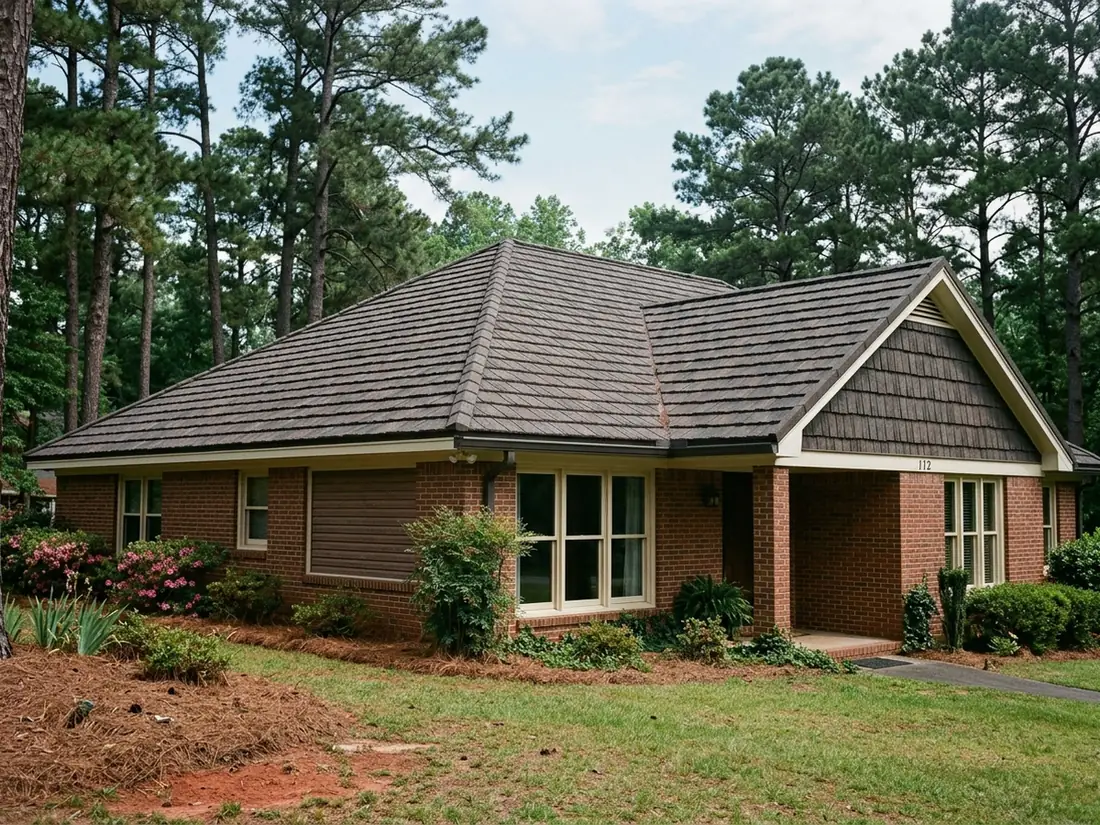
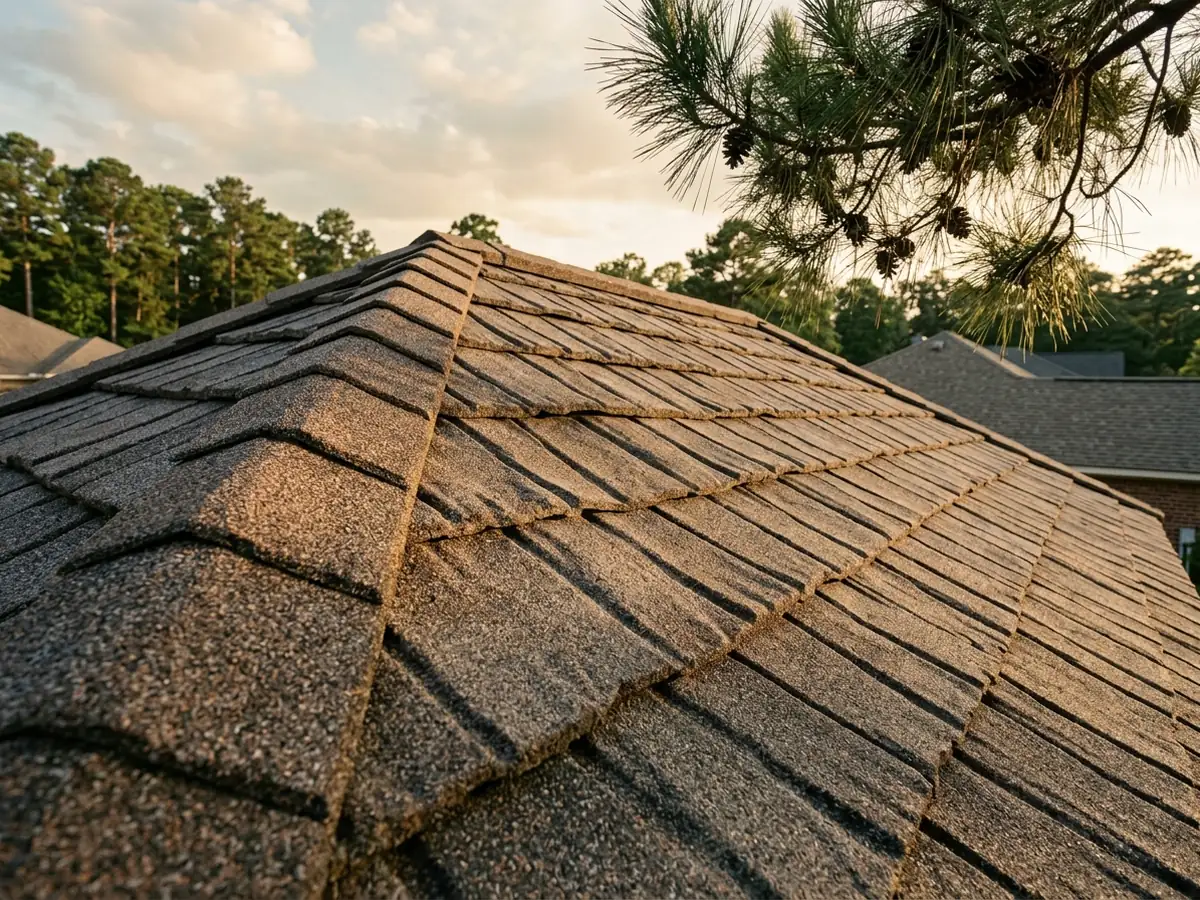
Stone-coated steel is coated steel pressed into shake, barrel-tile or shingle profiles, with stone granules bonded to the face. From the curb it looks like wood or clay, not metal. Panels usually hang on wood battens fastened across the deck, which leaves an air space under the roof. It suits buyers who want a shake or tile look with steel underneath. Impact ratings vary by product line, so ask for the UL 2218 class on the product sheet, not on a brochure.
Corrugated and Exposed-Fastener Metal Roofing
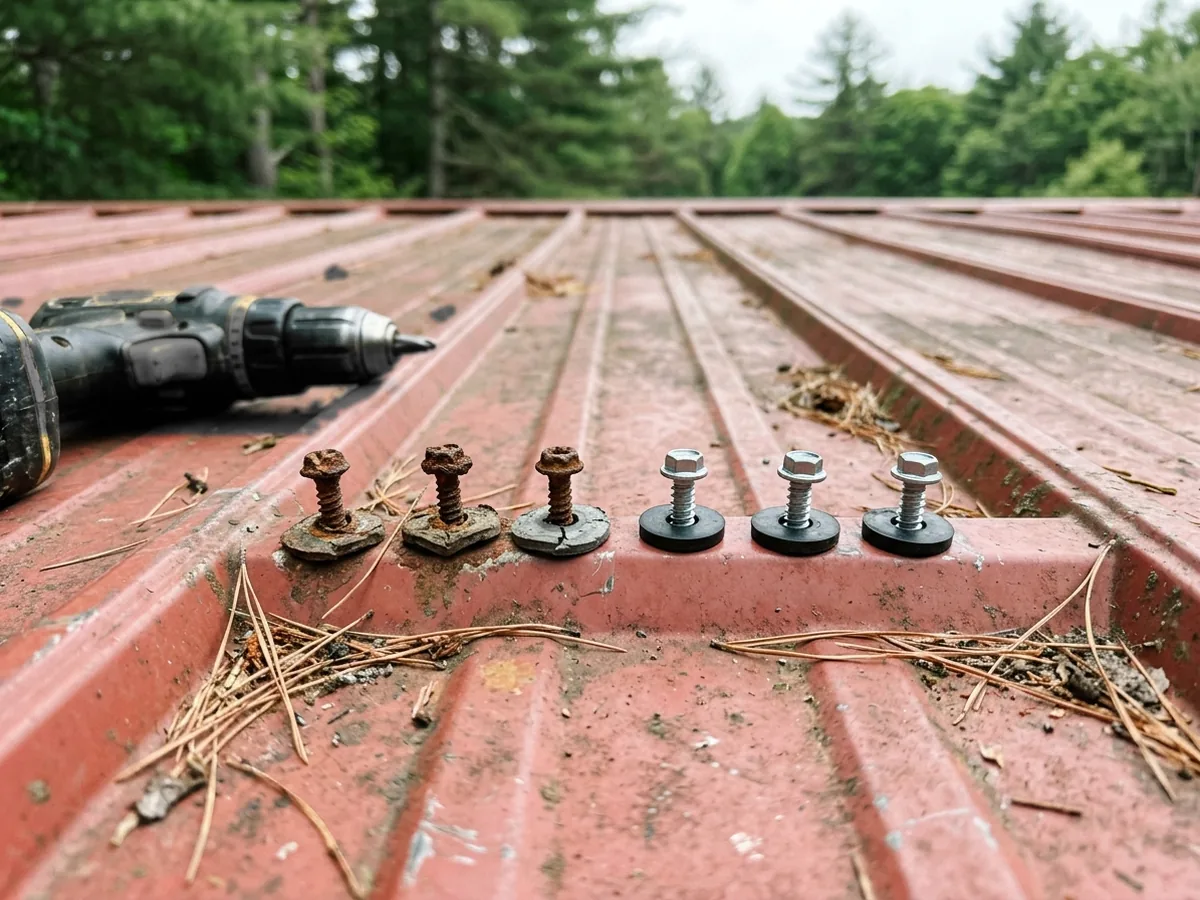
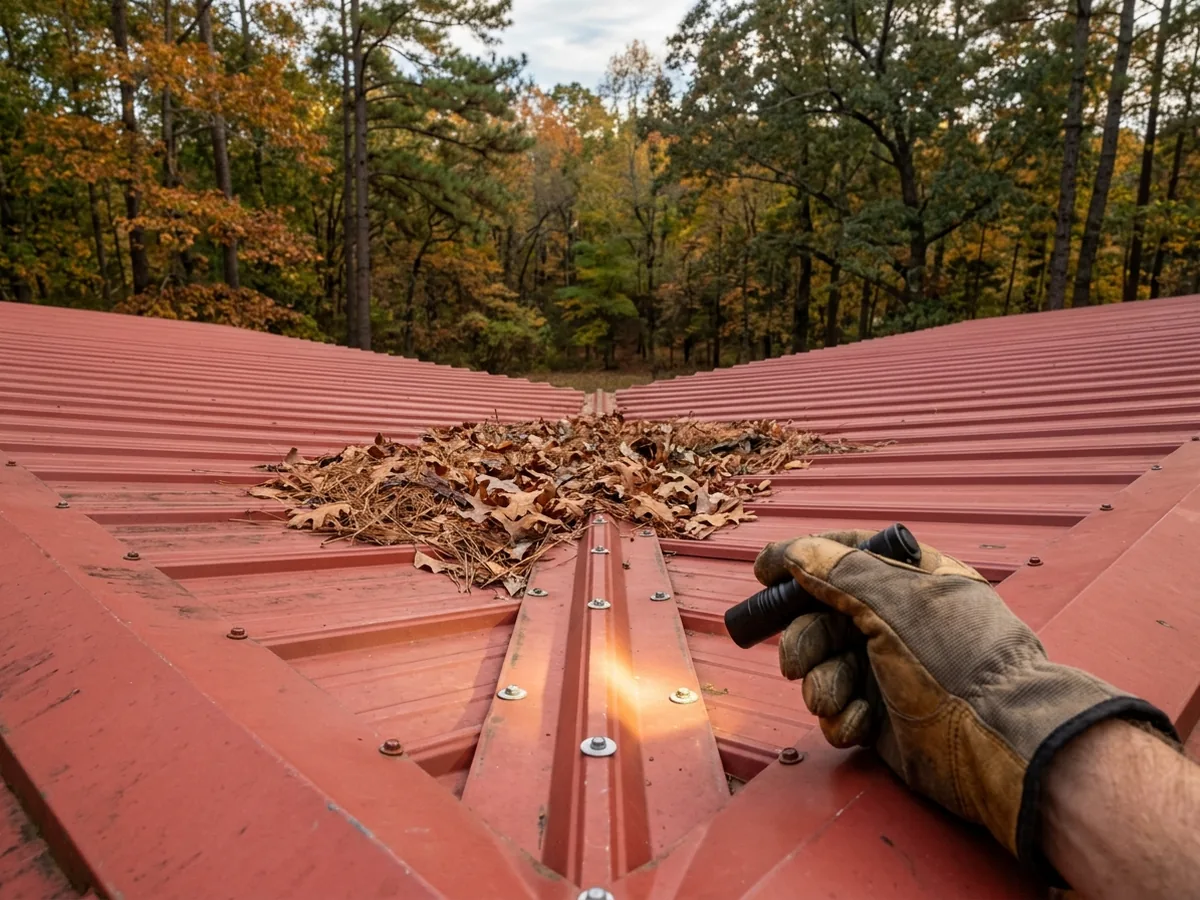
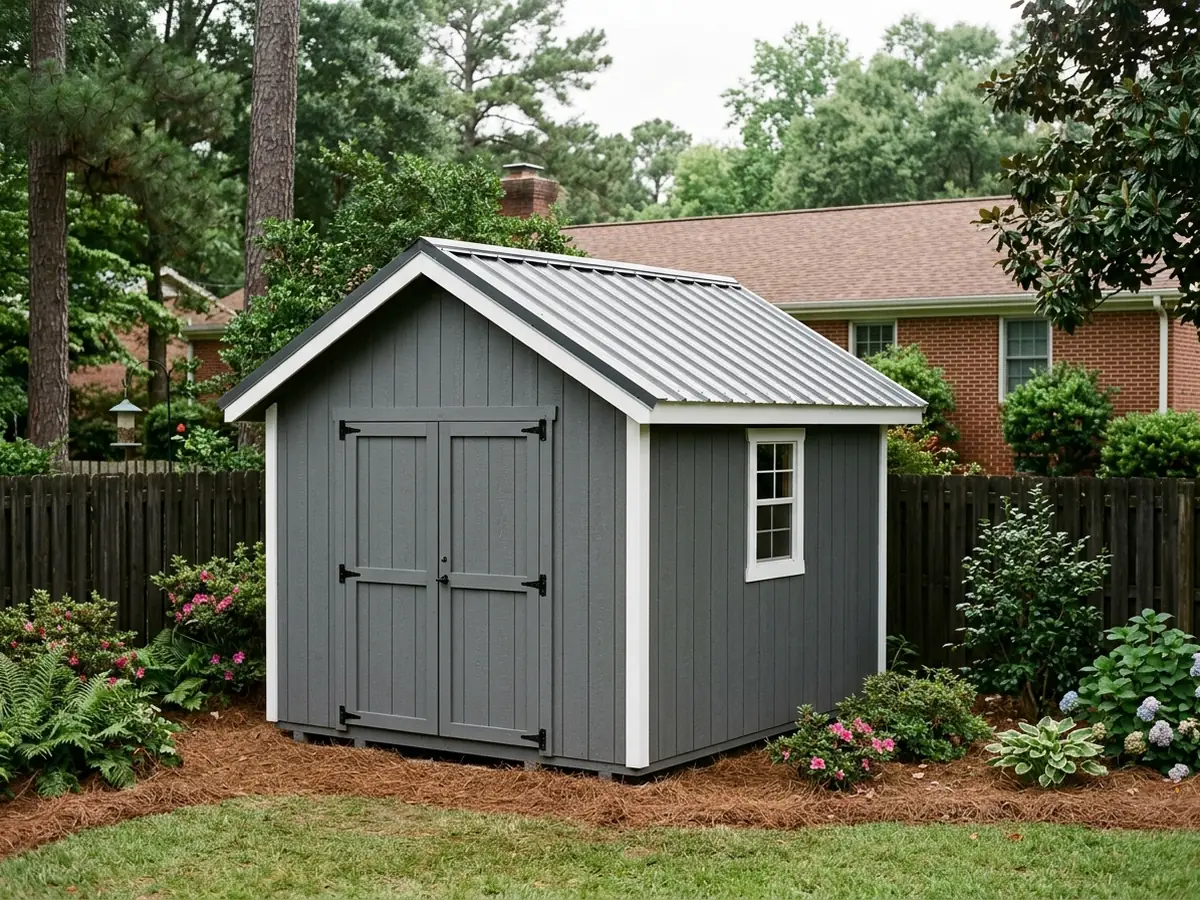
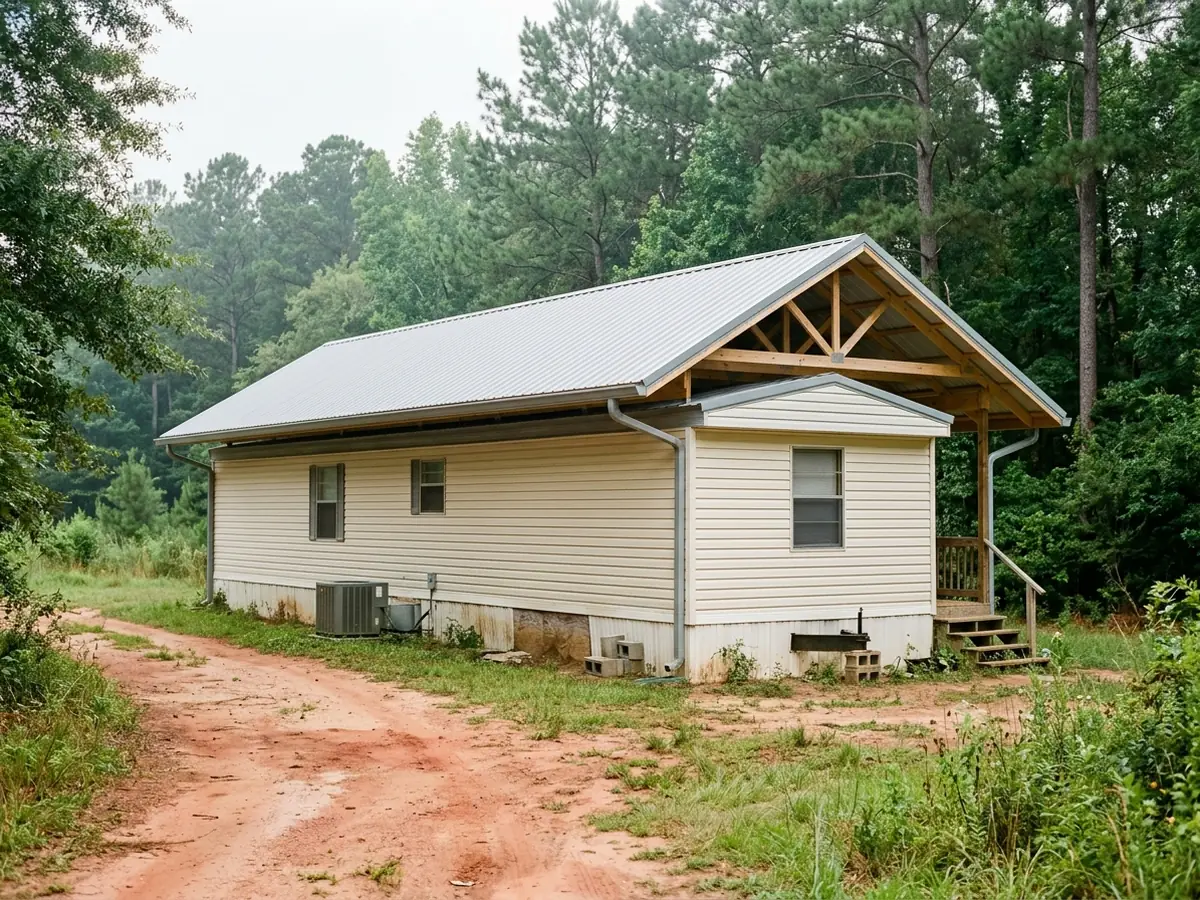
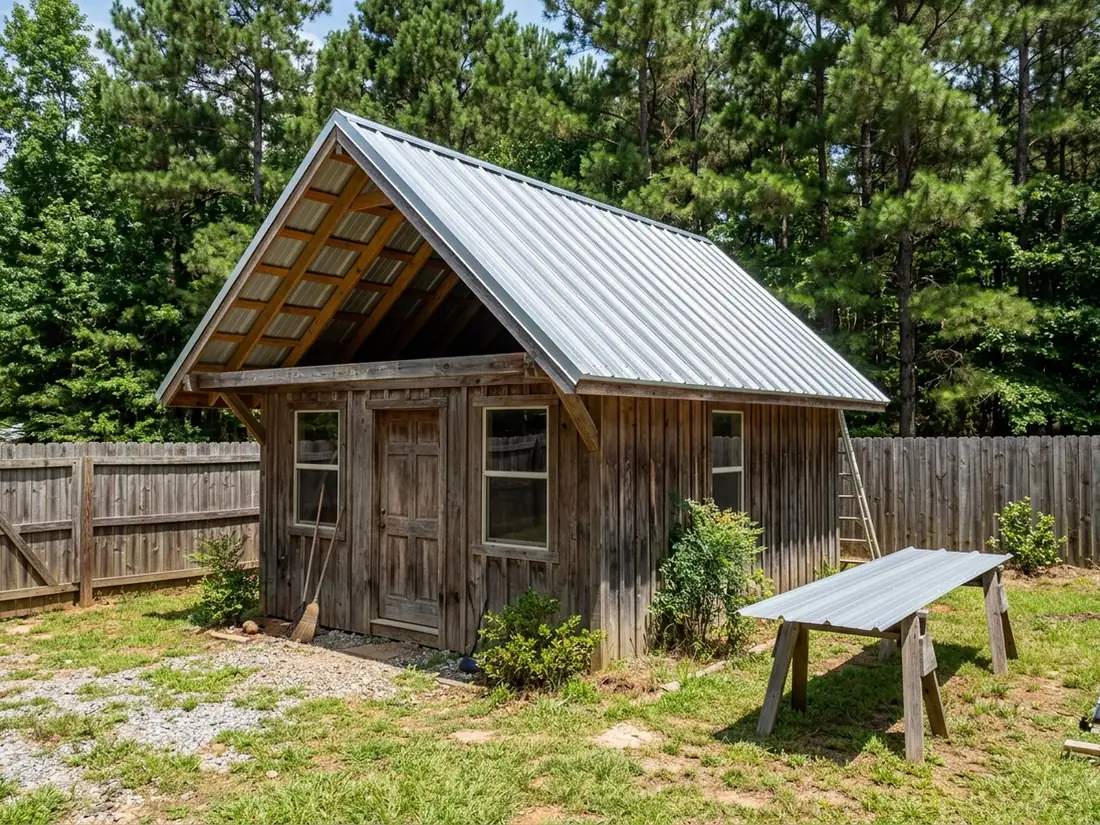
This is the workhorse family: corrugated, R-panel, PBR and 5V crimp. Panels lap side by side and screw straight through the face into purlins or deck, each screw sealed by a rubber washer. It's the cheapest metal roof to put on and the one with the most upkeep. Lapped panels without sealant need a 3:12 slope. With applied lap sealant the code allows 1/2:12 (R905.10.2). Think of every screw as a small gasketed hole. After enough summers on a hot roof the washers harden, the screws work loose, and the roof needs a re-screw. It's still the right call on plenty of porches, sheds and back additions, as long as you know it needs looking after.
Copper and Zinc Roof Accents
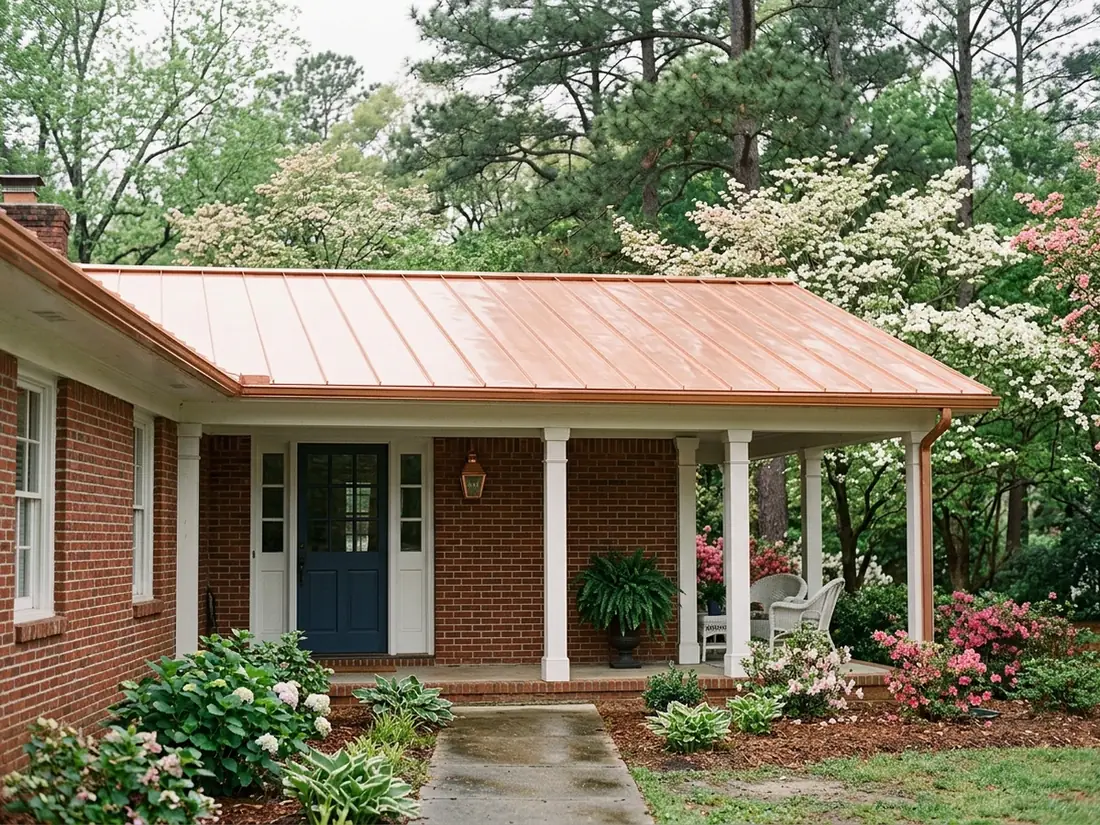
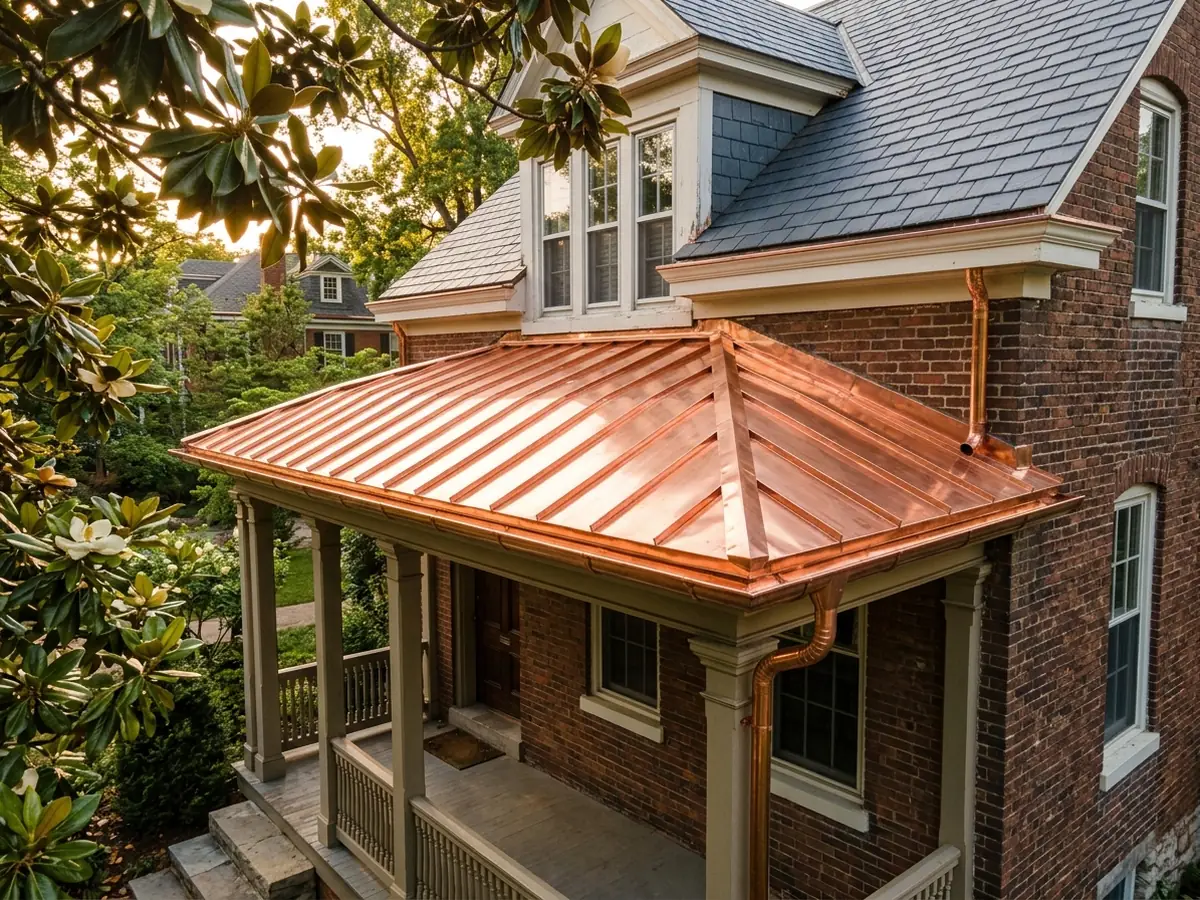
Copper is the metal people use for accents: porch roofs, bay windows, dormers and eyebrow roofs on brick houses. It's soldered or seamed, starts out bright, turns brown, and slowly goes green as the patina forms. Zinc weathers to a soft blue-grey. These are the highest-ticket metals on this page, so most owners use them on one feature rather than the whole house. A good roofer will keep copper runoff off steel and Galvalume below it, because the copper eats the coating.
See Copper and Zinc Roofing in Columbia and Metal Porch Roof in Columbia.
Aluminum Roof Panels
Aluminum doesn't rust, which is most of its appeal. It weighs less than steel and costs more. The code sets a minimum of 0.024 inch for roll-formed aluminum panels to ASTM B209. It works well on low porches and sections that stay damp under trees.
Metal Roof Over Shingles
The code allows a re-cover over one sound layer of shingles. It bans one where two or more layers are already on, where the roof is water-soaked or deteriorated, or over slate or tile (R908.3.1.1). Standing seam systems that carry loads to the structure don't require tear-off. Our view: if you're paying for standing seam, tear off. You get to see and fix the deck, and the new roof doesn't sit on a layer that holds heat and moisture.
See Metal Roof Over Shingles in Columbia and Mobile Home Metal Roof in Columbia.
Metal Roof Leak and Fastener Repair
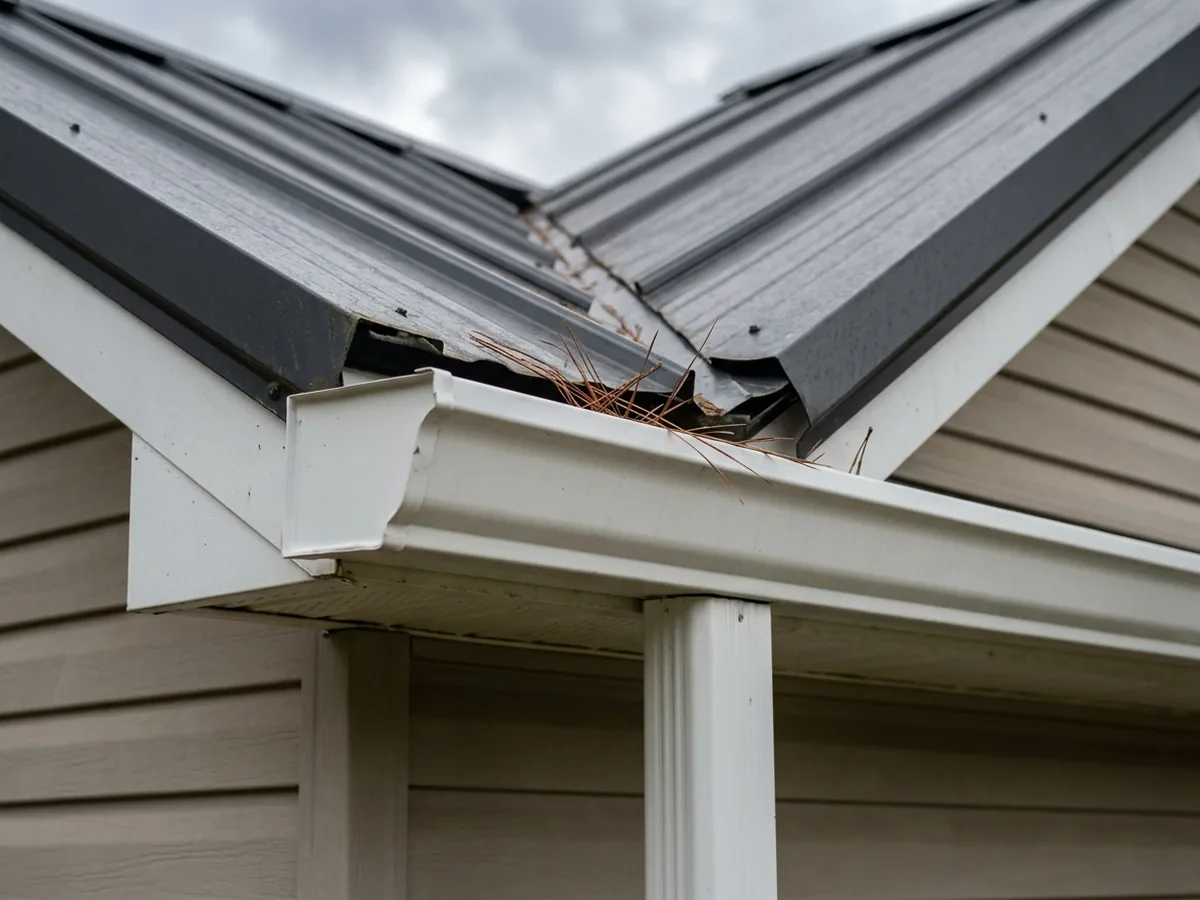
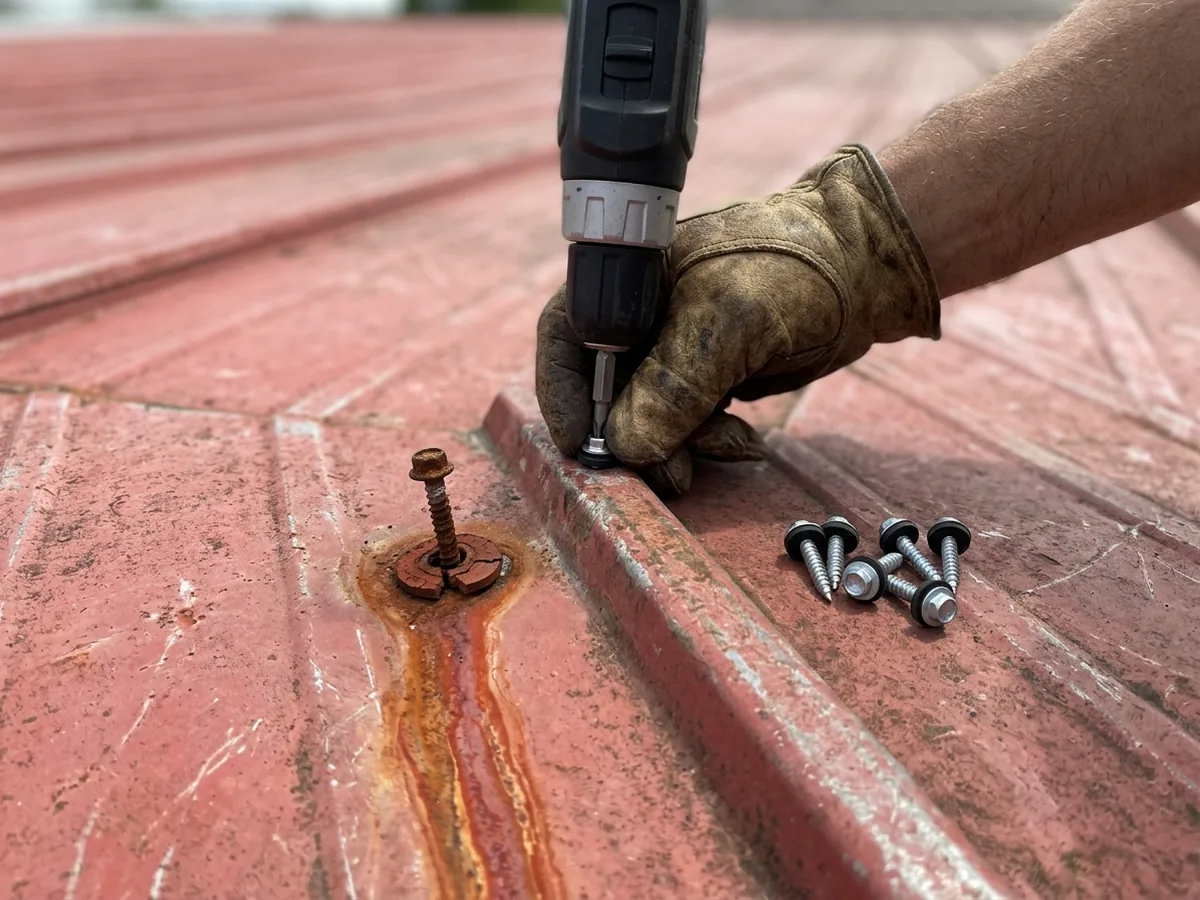
On an older metal roof, the leak is rarely the panel. It's a screw that backed out, a sun-cracked washer, a split pipe boot, flashing at a chimney or sidewall, or a lap that opened up. Repair means oversized replacement screws with new washers, resealed laps, new boots, re-bent or new flashing, and a swapped panel where a limb came through. Ask the roofer to walk and photograph the whole roof, not only the area above the ceiling stain. Water travels along a panel rib before it drips.
See Metal Roof Repair in Columbia and Metal Roof Replacement in Columbia.
Metal Roof Coating and Painting
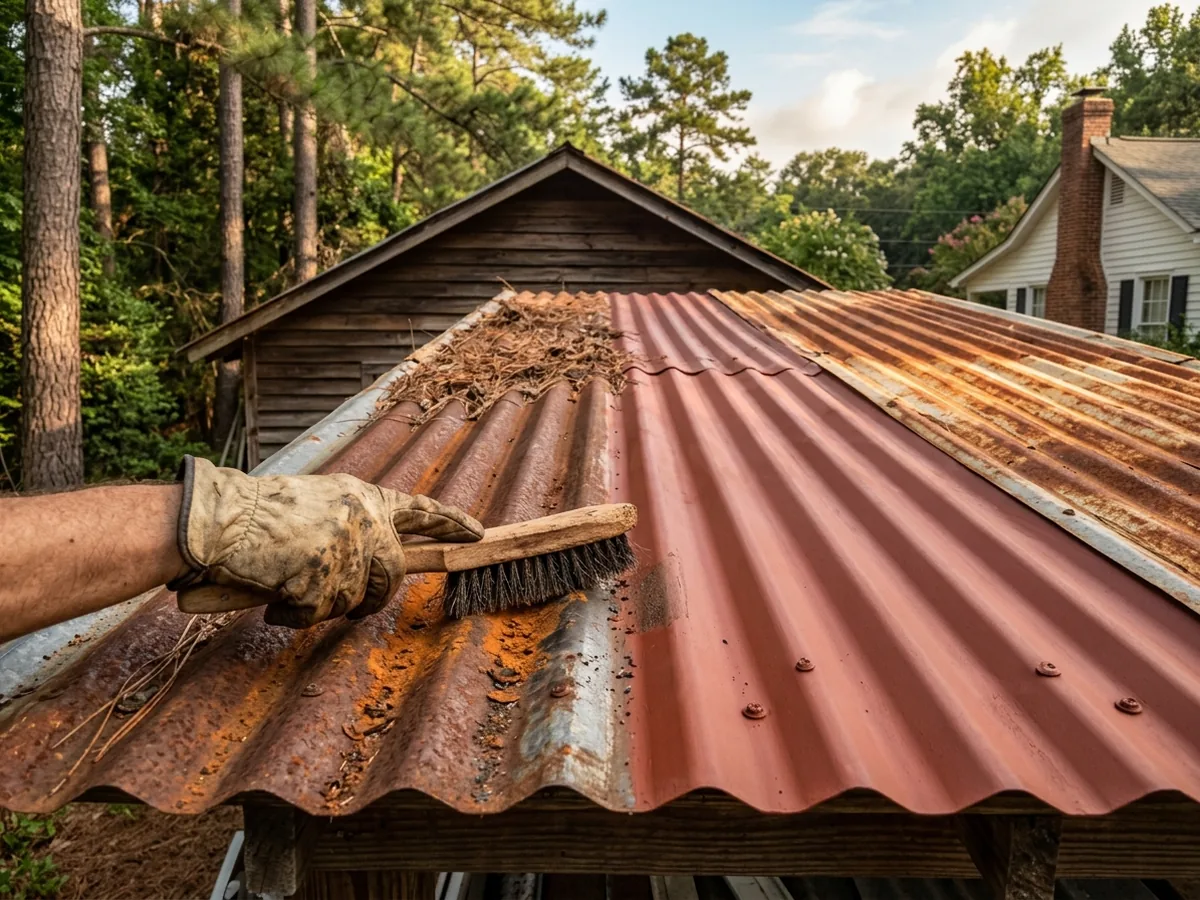
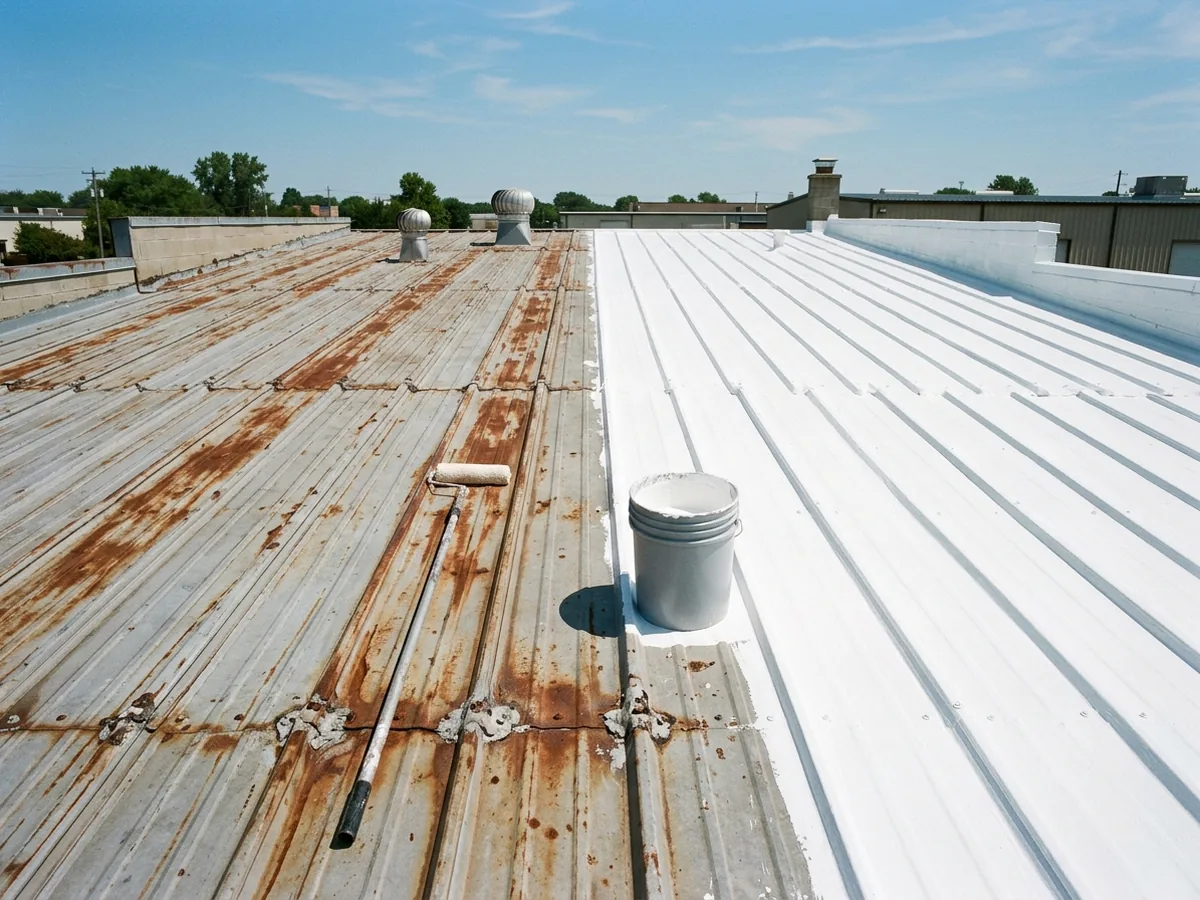
When an exposed-fastener roof has gone chalky and spotted with surface rust, restoring it is often an option. The sequence: wash, treat the rust, replace screws, seal the laps, then roll or spray a silicone or acrylic coating. A white coating also cuts heat gain. Painted standing seam can be repainted too, which is part of why metal outlasts other roofs. Coating doesn't fix rust-through. If a screwdriver goes through the panel, that section needs new steel.
Metal Roofing for Columbia's Heat, Humidity and Storms
Columbia sits in a humid subtropical climate, and the city's tourism board once marketed it as "Famously Hot." Snow barely registers here, at 1.2 inches in a normal year. A roof in Columbia has to handle long heat, damp air and fast summer storms.
Reflective Metal Roof Finishes for Summer Heat
Columbia Metropolitan Airport averages 80.8 days a year at 90°F or higher and 6 at 100°F or more. On a roof, color is most of the battle: light colors and cool-pigment paints bounce back sunlight a dark panel soaks up. The numbers behind that are on our Galvalume metal roof page. ENERGY STAR stopped certifying roof products on June 1, 2022, so a quote promising an "ENERGY STAR roof" is out of date.
Underlayment and Ventilation Against Humidity
Warm wet air meeting cold steel makes condensation, the same way a glass of sweet tea sweats on the porch. On a house, the deck and underlayment keep that moisture off the framing, and attic venting carries it out. On an open shed or barn, panels sit straight on purlins with nothing under them. On a cool morning they drip on whatever is parked below. Ask about a condensation-control backing for those buildings.
Wind Uplift Ratings for Storm Season
Thunderstorm wind is the everyday threat. NOAA logged 331 thunderstorm-wind reports in Richland County from 2015 to 2024, about 33 a year, with a top measured gust of 61 knots. Tropical Storm Helene gusted to 67 mph at Columbia Metropolitan Airport in September 2024. South Carolina takes design wind speeds from the Building Codes Council's maps, and the local building official can set the zone. Ask for the clip or screw spacing that matches your roof's design pressure. For metal shingles, ask for the UL 580 or UL 1897 uplift result.
Hail Impact Ratings (UL 2218)
Richland County logged 49 hail reports from 2015 to 2024, 15 of them an inch or larger, with the largest at 1.75 inches. The UL 2218 Class 4 test drops a 2-inch steel ball, which is bigger than any of those stones. Hail can dent metal without making it leak. A dent is cosmetic, a puncture isn't, so ask your insurer how your policy treats cosmetic damage to a metal roof. South Carolina insurers must tell you at each renewal what discounts they give for wind-resistant construction. The state's SC Safe Home grants don't cover Richland County.
Commercial and Agricultural Metal Roofing in Columbia
For owners and property managers: we pass commercial, church and farm requests to a contractor who works on that kind of building.
Church Metal Roofing
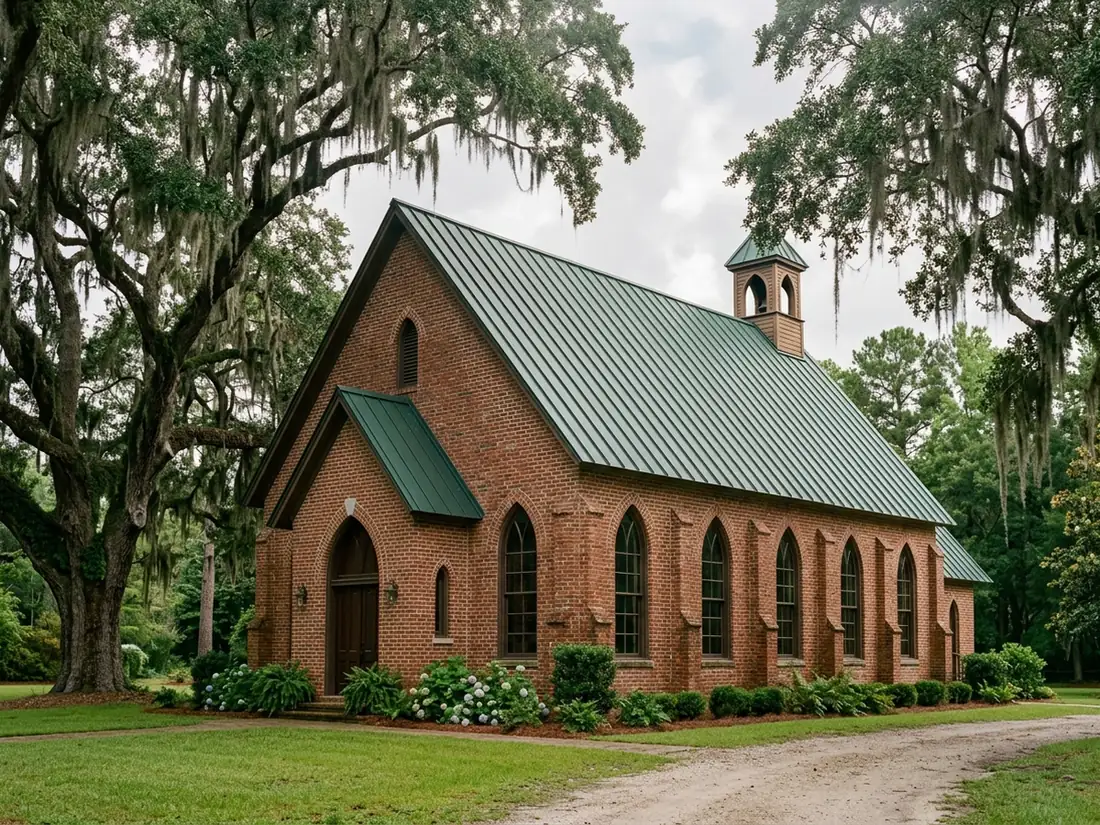
Sanctuary roofs are steep and tall, steeples need custom sheet-metal work, and the decision goes through a committee or a board. Ask for a written scope with priced options, such as standing seam on the sanctuary and exposed fastener on the fellowship hall, so the committee can compare line by line.
Warehouse, Shop and Metal Building Roofs
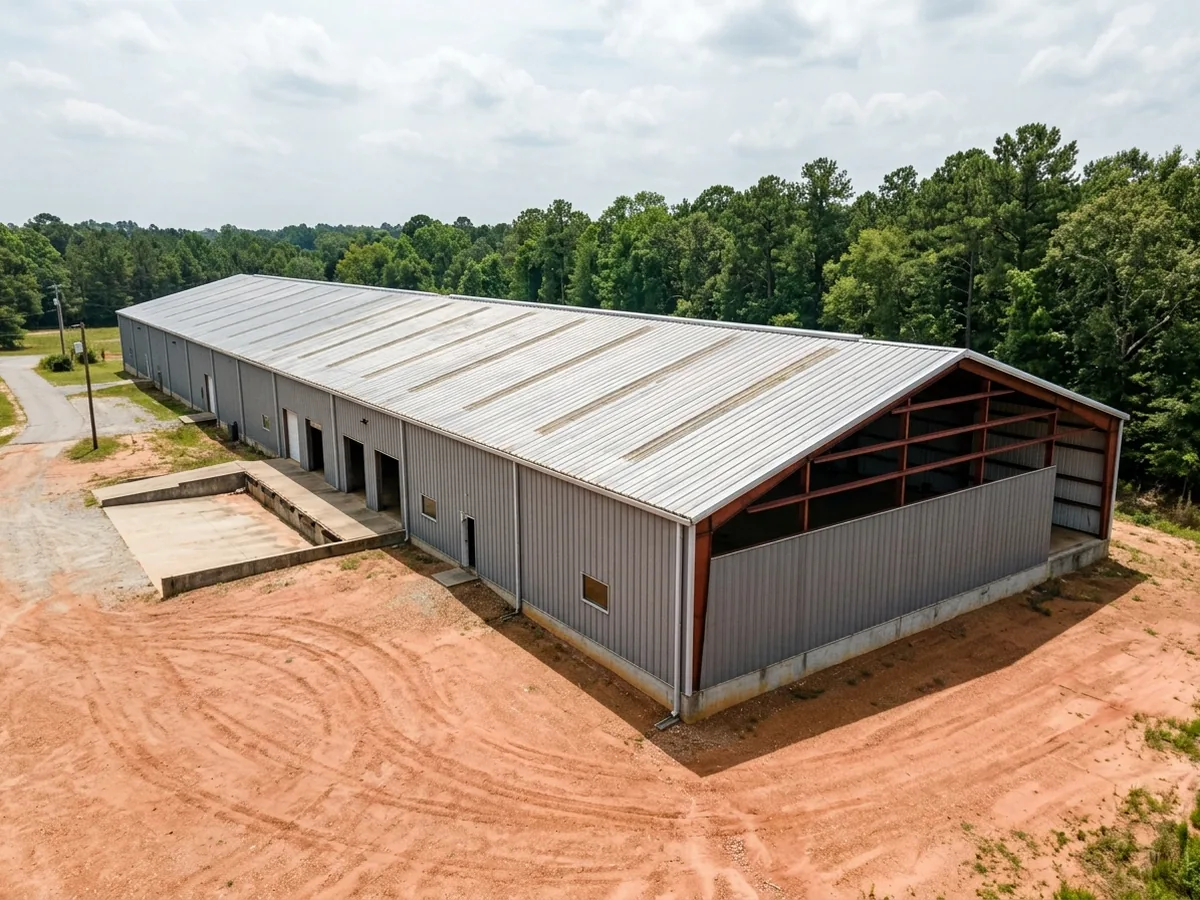
Metal buildings mostly run PBR or structural standing seam over purlins. Older ones often need a retrofit: new panels over the old roof on a sub-framing system, or a re-screw and coating if the steel is sound. Low-slope Galvalume holds up well. In a Metal Construction Association study of 14 low-slope unpainted standing seam roofs up to 35 years old, coating life was 79 years or more on all but one site.
Restaurant, Retail and Office Metal Roofing
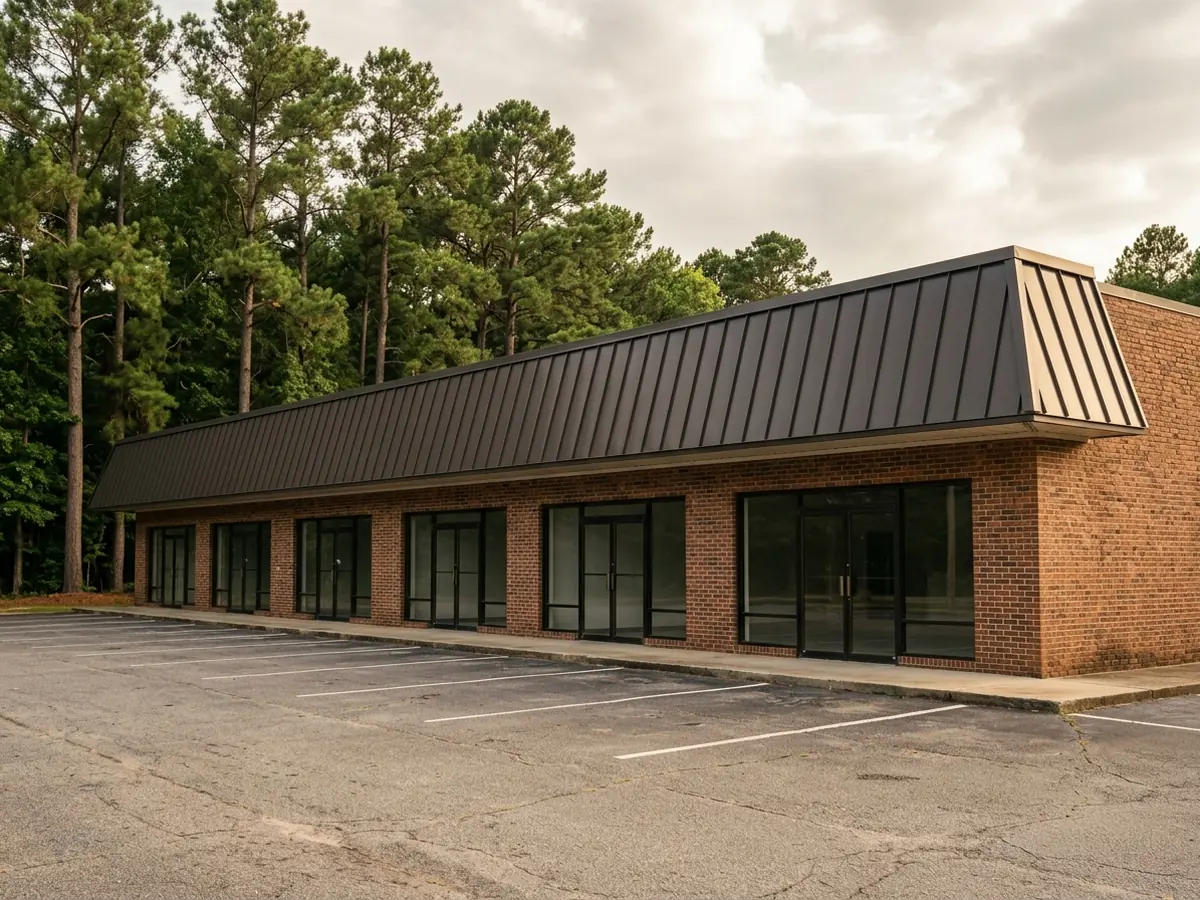
Mansards, entry canopies and storefront roofs are often metal, with low-slope sections behind parapets. The work happens around open hours, delivery doors and kitchen exhaust, so ask for a staging plan that keeps the entrance clear.
Barn, Pole Barn and Carport Metal Roofs
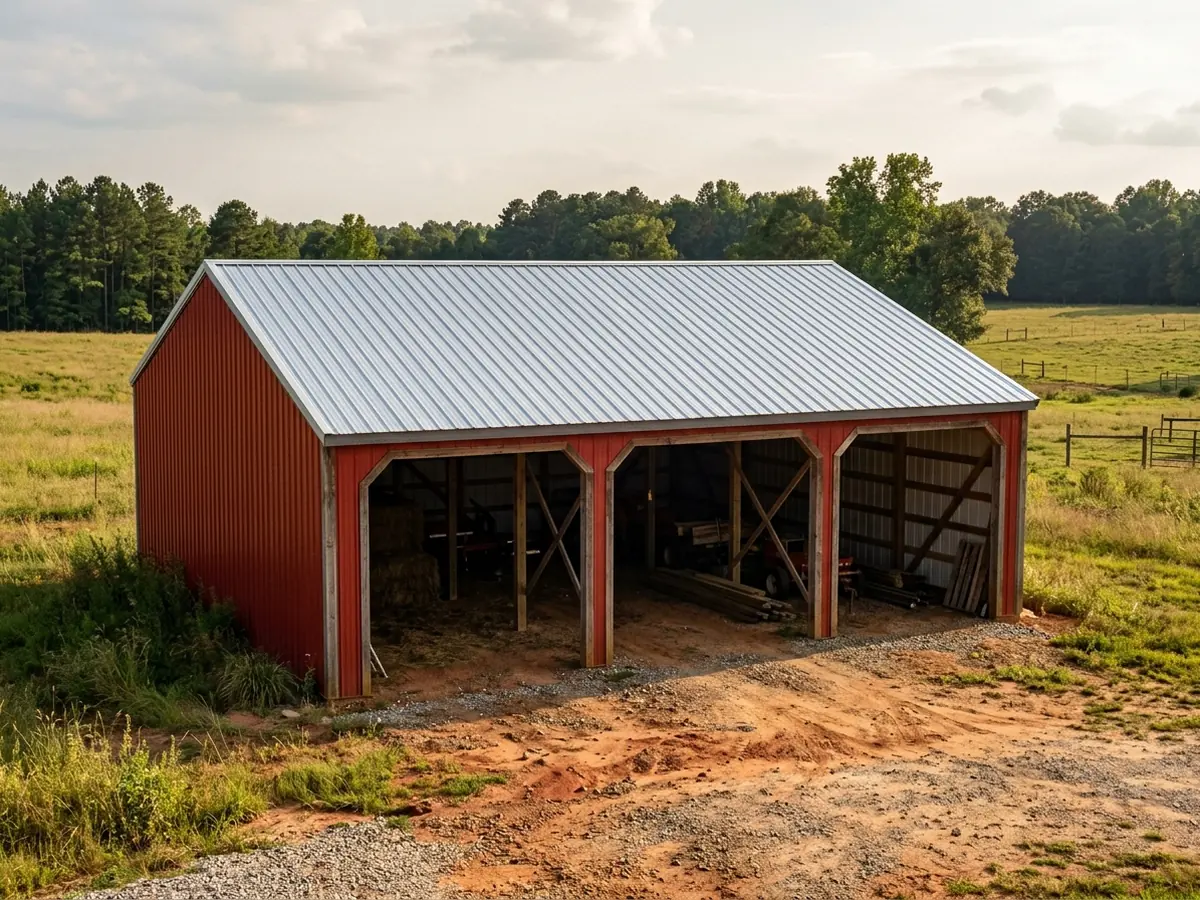
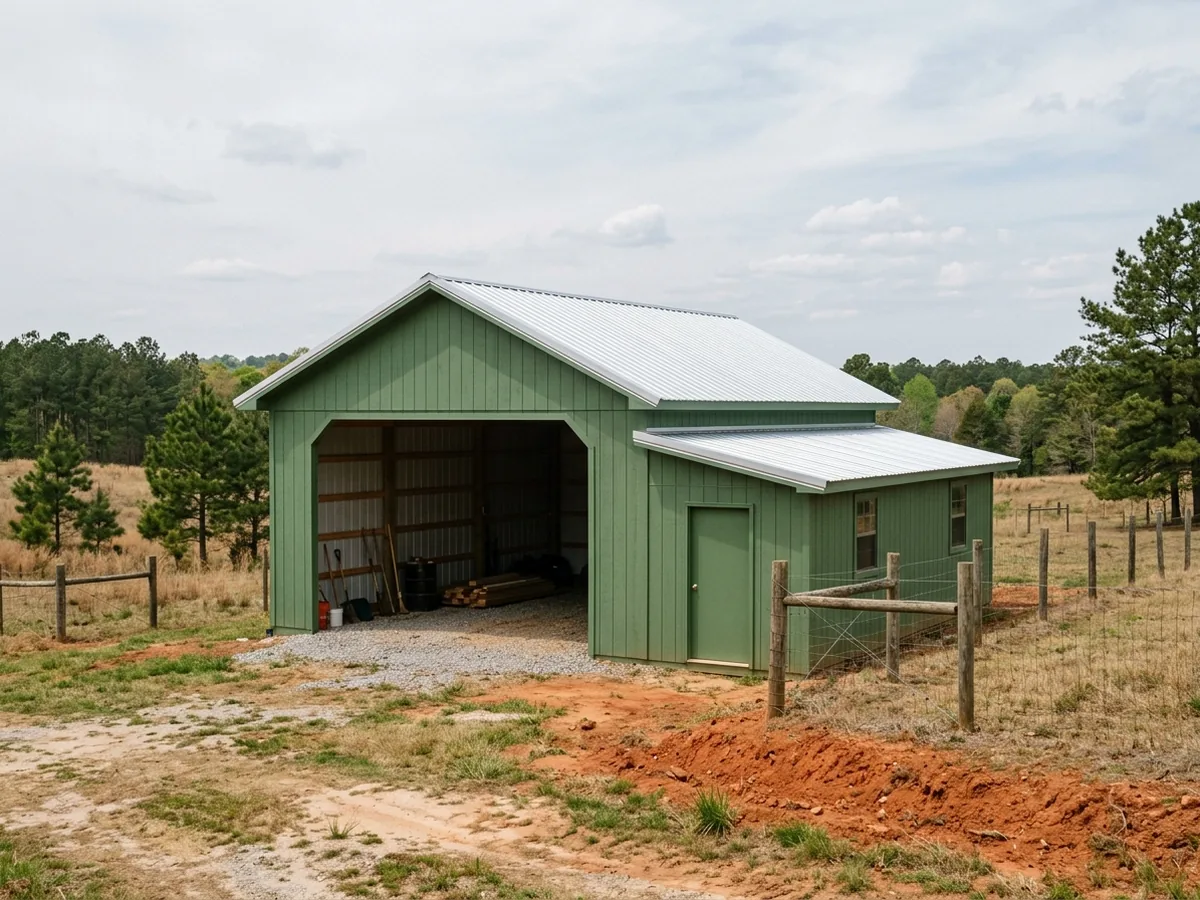
Barns, pole barns, equipment sheds and carports take ag panels screwed to purlins, with foam closure strips at the eave and ridge to keep out wind-driven rain, wasps and birds. Steel sits close to the ground here, over red clay that stays wet after a storm, so the corrosion coating matters more than the color. Ask for Galvalume or G90 galvanized, and for condensation control if anything inside can't get dripped on.
See Barn Metal Roofing in Columbia and Metal Shed Roof in Columbia.
Metal Roof Steel, Gauge and Paint Specs
A metal roof quote should name every item below. If one is missing, ask for it before you compare prices.
24, 26 or 29 gauge
A lower gauge number means thicker steel. Two "standing seam" quotes at 24 and 26 gauge are two different products.Galvalume or galvanized
The code minimum for steel roofing is 55% aluminum-zinc coated steel to ASTM A792 AZ50, or galvanized steel to ASTM A653 G90. Painted steel goes over one of those under ASTM A755.PVDF or SMP paint
Kynar 500 PVDF paint carries at least 70% PVDF resin by weight under its licensing terms, and the resin is proven under severe UV for over 25 years. SMP (silicone-modified polyester) is the lower-cost system. On a south-facing roof in this sun, ask which one you're getting.Underlayment
Where wind design is required, South Carolina's code calls for ASTM D226 Type II or ASTM D4869 Type III or IV under metal panels. Otherwise it follows the panel maker's instructions. Ask for the product name.Trim, flashing and gutters
Drip edge, rake trim, ridge cap, valleys and chimney flashing should match the panel metal and paint. A good roofer won't put bare steel trim against copper.Fasteners and clips
Standing seam uses concealed clips, and long runs need clips that let the panel slide. Exposed-fastener roofs use gasketed screws made for the panel. Ask for the spacing.Fire rating
Metal sheets and shingles count as Class A roof assemblies in the code when installed on noncombustible decks (R902.1).
Get a free metal roofing estimate in Columbia
- A free on-site measure and a written quote
- Panel type, steel gauge and paint system spelled out before you sign
- Ask who pulls the roofing permit: it goes in the scope
- Your request goes to one independent metal roofer, not a list
- No fee to the property owner for the referral
Metal Roofing Installation Process, Step by Step
STEP 01
Request an Estimate
Call or use the form with your address and a line about the roof. We pass it to one contractor, who calls you to set a visit.
STEP 02
Measure and Deck Check
The roofer measures every plane, checks pitch, and looks at the deck from the attic and from the roof for soft spots, old leaks and venting.
STEP 03
Written Scope: Panel, Gauge and Color
You get a written estimate with the panel profile, gauge, steel coating, paint system, color, underlayment, trim and gutters, and what happens if the deck needs new sheets.
STEP 04
Roofing Permit
A good roofer will file the city roofing permit before the old roof comes off.
STEP 05
Tear-Off and Dry-In
The old roof comes off one section at a time, and underlayment goes down the same day. In summer, crews start early and keep an eye on the sky, because afternoon thunderstorms build fast.
STEP 06
Panels, Trim and Flashing
Panels go on, then ridge cap, valleys, wall and chimney flashing, pipe boots and gutters.
STEP 07
Final Walk and Paperwork
Walk the roof line and yard with the roofer. Check for stray screws and metal shavings on the panels and nails in the grass, and get the closed permit and product details in writing.
Metal Roofing Cost in Columbia
Most metal roofs cost $5 to $16 per square foot installed, or about $7,500 to $40,000 for a whole roof, according to HomeGuide's 2026 national figures. Angi puts the national average at $11,764, with most projects between $6,043 and $18,340. We found no published price for Columbia alone, so use these as a starting point.
HomeGuide breaks out installed prices by type. Standing seam runs $9 to $16 per square foot, metal shingles $6 to $14, and corrugated $5 to $12. Labor is $4 to $8 of that.
Metal Roof Cost for 1,000 and 2,000 Square Feet
Measure roof area, not living area. Overhangs, porches and pitch make the roof larger than the floor plan below it. At HomeGuide's $5 to $16 range, 1,000 square feet of roof works out to $5,000 to $16,000. For 2,000 square feet, it's $10,000 to $32,000. In standing seam alone, 2,000 square feet comes to $18,000 to $32,000.
What Moves a Metal Roofing Quote
The biggest swings come from panel type, gauge and paint system. Next is tear-off: the number of layers and how much decking gets replaced. A cut-up roof with valleys, dormers and chimneys costs more than a simple gable.
Metal Roofing Permits, Codes and Choosing a Contractor in Columbia
Inside city limits, roofing permits go through the City of Columbia's Planning & Development Services. Its roofing permit application asks for the contractor's South Carolina license number and the job value. Licensed contractors can apply and pay online through the city's Access portal, and a job in a design, historic or flood district may need more information.
Columbia has 15 historic districts and 5 community character districts. Changes to historic buildings need a Certificate of Design Approval, and projects go to preservation staff for a consultation first. The rules differ by district. The Melrose Heights/Oak Lawn guidelines, for example, ask for replacement roofing in dark shades that match the original, name composition or asphalt shingles as the example, and review only what's visible from the street. So talk to preservation staff before you pick a panel.
The 2021 South Carolina Residential Code has been in force since January 1, 2023. The 2024 edition takes over for local jurisdictions on January 1, 2027, so for a job permitted in 2027, ask the roofer which edition applies.
Questions to ask any metal roofing contractor:
Who pulls the permit?
The contractor should, under their own license number.What gauge and panel profile?
Get the exact profile and gauge, not just "metal roof".What clips or screws, and at what spacing?
For standing seam, ask whether the clips let the panel slide.Which underlayment?
Ask for the brand and type, not just "synthetic".Tear-off or re-cover, and why?
The answer should match the code limits above.
Metal Roofing Service Area: Columbia, SC
Columbia Metal Roofs takes requests for addresses in the City of Columbia, which sits almost entirely in Richland County with a small part in Lexington County. Not sure your address is inside city limits? Put it in the form and we'll check.